Monday, December 31, 2007

Items

Saturday, November 24, 2007

association

Friday, September 14, 2007

Links to Atheism

Sunday, December 31, 2006

ANATOMY

inside "Brain"

surface anatomy

image site author
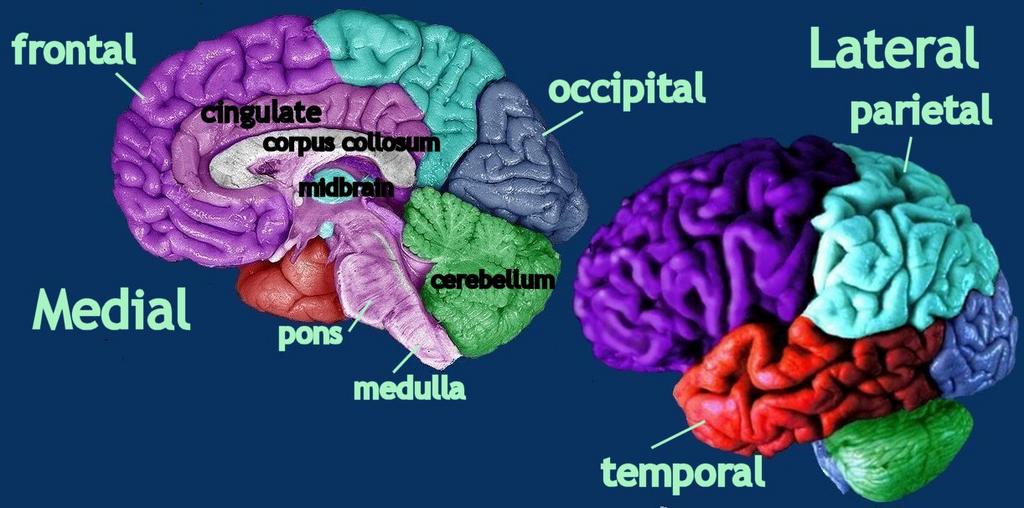
The medial surface of the brain shows the midline surfaces of the cerebral hemispheres and the cingulate gyrus, and cut surfaces of corpus collosum, midbrain, pons, and cerebellum. The lateral view shows the lobes of the cerebral hemispheres.
These voxel movies may be slow to open, but they are short: voxel animation - spin a brain : voxel animation - rotate a skull

frontal lobes

image site author
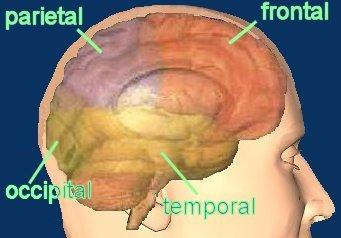
The cerebral hemispheres comprise paired lobes: frontal, temporal, parietal and occipital.

frontal lobes

image site author, adapted from NEJM Digitally Remastered image
Arguably the most famous neurological accident affected Phineas Gage in 1848 when a 3 ft. 7 inch tamping iron exploded up through Gage's skull. Gage recovered physically, but his personality was permanently altered by damage to his left frontal lobe. As a result of Gage's misfortune, the frontal lobes were identified as the seat of the personality.

temporal lobes

occipital lobes

parietal lobes

limbic system

image site author

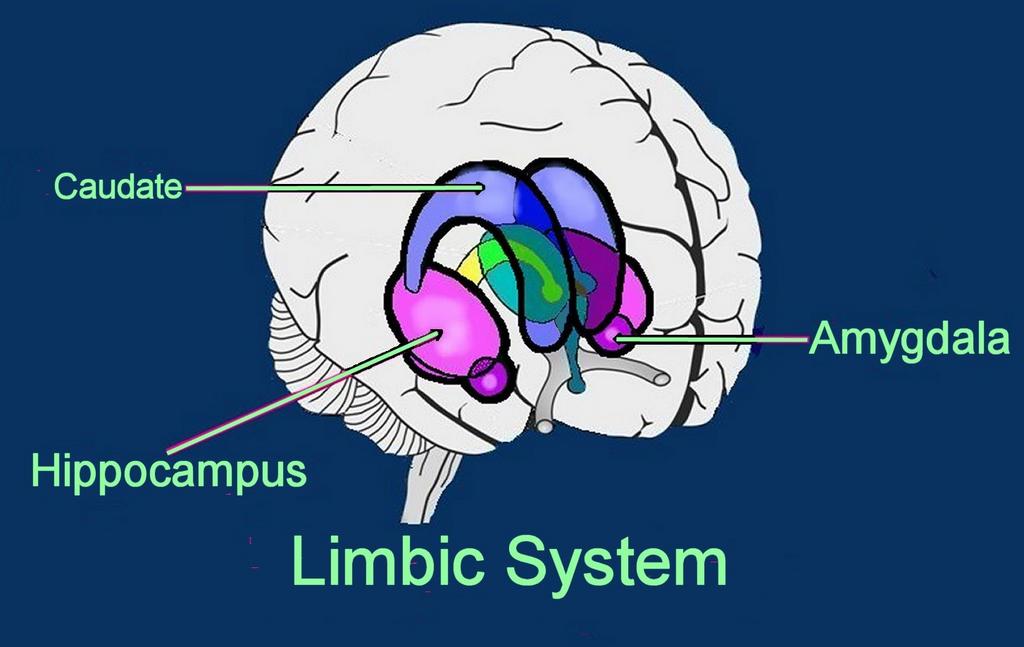
Unlike the lobes of the neocortex, the limbic system has an evolutionarily primitive origin. The amygdala processes emotion, the hippocampus is central to emotional memory, and the caudate nucleus operates during execution of habitual movements.

hippocampus

amydala

neuron

The neuron is the basic operating unit of the central nervous system. Inter-neuronal information processing, involving complex neural networks, provides the nervous system with its enormous functional capacity. The human brain contains about 10^(11) neurons*, which connect, via synapses, with an average of 1000 other neurons. In total, the human brain may contain somewhere between 10^(14) and 10^(15) synaptic connections. Neurotransmitter chemicals effect the connection between neurons, when they cross the gap between neurons and interact with a specific receptor molecule. More than one hundred chemicals and a much larger number of receptors have been implicated in synaptic transmission. Some neurotransmitters are the targets of drug therapies. Receptor molecules are the targets of neurotoxic venomous substances.

* 10^(11) is equivalent to a 10 followed by 11 zeros = 1,000,000,000,000

For more information on neurons, neuroglial cells, and neurochemistry:
Main page of Neuron : action potential : axon : dendrite : dendritic spines : excitatory : inhibitory : integration : interneuron : metabotropic
neuron : synapse

Main page of Cell : cell membrane : endoplasmic reticulum : Golgi apparatus : ion channels : pinocytosis

Main page of BioChemistry : hydrophilic : hydrophobic :
Sunday, June 11, 2006

Sleep: Snooze Button

HHMI News: Researchers Find the Snooze Button: "With help from some drowsy fruit flies, a team of researchers from the Howard Hughes Medical Institute (HHMI) at the University of Pennsylvania School of Medicine has identified a region of the fruit fly's brain that is crucial to controlling sleep.
The finding, reported in the June 8, 2006, issue of the journal Nature, is important because it identifies a new role for brain structures, called mushroom bodies, which have now been shown to control fruit fly slumber. Mushroom bodies were known to be involved in processing sensory information and memory. Thus, the new studies lend support to the idea that sleep helps the brain consolidate learning and memory. "
Saturday, December 31, 2005

SITE MAP

Articles

SITE MAP
Neurons Generated In The Adult Brain Learn To Respond To Novel Stimuli / Stress : CASL
Imaging: arterial spin labelling / Stathmin: Loss of Fear Factor Makes Timid Mouse Bold /
Solving Big Questions: HHMI Bulletin September 2005: / Misfolded Proteins /
BOLD fMRI vs electrophysiological / DTI: Diffusion Tensor Imaging / Vision / BOLD fMRI
Memory: EPIGENETIC MECHANISMS IN MEMORY FORMATION /
DID PTSD: Researchers Identify Where Emotional Fear Memory And Pain Become Permanently Etched In The Brain / FUNCTION / memory / consciousness / dissociation
NEURON / IMAGING / RESEARCH ARTICLE LINKS
Aging: Memory Loss In Older Adults Due To Distractions, Not Inability To Focus /
Neurochemistry: New Techniques Study The Brain's Chemistry, Neuron By Neuron /
Glossary / hydrophilic / hydrophobic
LINKS / Development: Imaging Study Shows Brain Maturing / Society for Neuroscience Brain Facts / Society for Neuroscience Public Resources /
mPFC: Excitotoxic lesions of the prelimbic-infralimbic areas of the rodent prefrontal cortex disrupt motor preparatory processes. /
RESEARCH /
Attention: Multiple neuronal networks mediate sustained attention. / Attention: The continuous performance test: a window on the neural substrates for attention? / Attention: Emotion: The interaction of attention and emotion. / Limbic system: The basal ganglia: anatomy, physiology, and pharmacology. / Emotion: Neural substrates of emotion as revealed by functional magnetic resonance imaging. / Fear: Emotional perseveration: an update on prefrontal-amygdala interactions in fear extinction. / Emotion: Limbic system: A review of systems and networks of the limbic forebrain/limbic midbrain. / Fear: Mesolimbic dopaminergic pathways in fear conditioning. / Positive Emotion: The neurobiology of positive emotions. / Fear: Brain activation to phobia-related words in phobic subjects. / Fear: Differential contribution of amygdala and hippocampust to cued and contextual fear conditioning / Aversion: Amygdala-prefrontal coupling depends on a genetic variation of the serotonin transporter. / Memory: Rapid prefrontal-hippocampal habituation to novel events. / Memory Suppression: Building and burying fear memories in the brain. / Memory: Subcortical loop activation during selection of currently relevant memories. / Memory: The primate working memory networks. /
Memory: Blockade of NMDA receptors in prelimbic cortex induces an enduring amnesia for odor-reward associative learning. / Memory: Glutamate: STRUCTURAL PLASTICITY AND MEMORY / Memory: Multiple memory systems: the power of interactions. / Memory: A synaptic model of memory: long-term potentiation in the hippocampus. / Stress: sfn Stress and the Brain / Stress: Medial prefrontal cortical integration of psychological stress in rats. /
Stress: Induction of deltaFosB in reward-related brain structures after chronic stress. /
Glucorticoids: Developmental regulation of the 5-HT7 serotonin receptor and transcription factor NGFI-A in the fetal guinea-pig limbic system: influen /
Somatosensory: Cytoarchitecture and cortical connections of the posterior cingulate and adjacent somatosensory fields in the rhesus monkey. /
Genes: Gene May Be Key To Evolution Of Larger Human Brain /
Fear & Cannabinoids: CB1 cannabinoid receptors modulate kinase and phosphatase activity during extinction of conditioned fear in mice. /
Placebo activates Endorphins to relieve Pain /
Pain: Attention to pain localization and unpleasantness discriminates the functions of the medial and lateral pain systems. /
Pain: IBS: Differences in brain responses to visceral pain between patients with irritable bowel syndrome and ulcerative colitis. /
Pain: Differential projections from the mediodorsal and centrolateral thalamic nuclei to the frontal cortex in rats. /
Sleep: What can neuroimaging findings tell us about sleep disorders? /
Ion Channels /
Sleep: MEG tomography of human cortex and brainstem activity in waking and REM sleep saccades. /
Depression: 5HT: Measurement of brain regional alpha-[11C]methyl-L-tryptophan trapping as a measure of serotonin synthesis in medication-free patients /
Violence: Social Psychology: Ordinary People as Torturers /
Imaging: Emotion: The neural bases of amusement and sadness: a comparison of block contrast and subject-specific emotion intensity regression approach /
Imaging: Magnetic resonance imaging of cerebellar-prefrontal and cerebellar-parietal functional connectivity. /
Imaging: Mood Insomnia: Relationship between regional cerebral blood flow and separate symptom clusters of major depression: a single photon emission /
Imaging: Magnetic resonance imaging identifies cytoarchitectonic subtypes of the normal human cerebral cortex. /
Imaging: Disorder-specific neuroanatomical correlates of attentional bias in obsessive-compulsive disorder, panic disorder, and hypochondriasis. /
Genes: 5HT: Beyond affect: A role for genetic variation of the serotonin transporter in neural activation during a cognitive attention task. /
Genes: 5HT: Frontal and limbic metabolic differences in subjects selected according to genetic variation of the SLC6A4 gene polymorphism. /
5HT: Regulation of septo-hippocampal activity by 5-hydroxytryptamine(2C) receptors. /
Cognition: Behavior: Frontal Lobes: Cognition, behavior and the frontal lobes. /
Decision: The cognitive neuroscience of human decision making: a review and conceptual framework. /
Morality Decisions:Influence of bodily harm on neural correlates of semantic and moral decision-making. /
Empathy: Prefrontal substrates of empathy: Psychometric evidence in a community sample. /
Disgust: fMRI: The moral affiliations of disgust: a functional MRI study. /
Behaviour: Impulsivity, emotion regulation, and developmental psychopathology: specificity versus generality of linkages. /
Behaviour: The primate basal ganglia: parallel and integrative networks. /
Behaviour: Oxytocin and vasopressin immunoreactivity within the forebrain and limbic-related areas in the mustached bat, Pteronotus parnellii. /
Behaviour: Response inhibition and disruptive behaviors: toward a multiprocess conception of etiological heterogeneity for ADHD combined type and cond /
Behaviour: Dissociable aspects of performance . lesions of the dorsal anterior cingulate, infralimbic and orbit /
Decision: Corticolimbic mechanisms in emotional decisions. /
Language: Frontal and posterior sources of event-related potentials in semantic comprehension. /
FM: Planting misinformation in the human mind: A 30-year investigation of the malleability of memory -- Loftus 12 (4): 361 -- Learning & Memory /
Autism: Localized enlargement of the frontal cortex in early autism. /
Autism: Enhanced salience and emotion recognition in Autism: a PET study. /
Autism: Neuroimaging in autistic spectrum disorder (ASD). /
Imaging: Emotion: A common neural basis for receptive and expressive communication of pleasant facial affect. /
Reward: Impact of expected reward on neuronal activity in prefrontal cortex, frontal and supplementary eye fields and premotor cortex. /
Highlights from Gage to NMR /
Wednesday, November 23, 2005

Neurons Generated In The Adult Brain Learn To Respond To Novel Stimuli

Neurons Generated In The Adult Brain Learn To Respond To Novel Stimuli: "Recent research has shown, however, that new cells are added to certain areas of the brain -- including those involved with memory and the sense of smell -- well into adulthood. "

Stress : CASL

Penn Research Permits First-ever Visualization Of Psychological Stress In The Human Brain: "The results showed increased cerebral blood-flow during the 'stress test' in the right anterior portion of the brain (prefrontal cortex) -- an area long associated with anxiety and depression. More interestingly, the increased cerebral blood-flow persisted even when the testing was complete. These results suggest a strong link between psychological stress and negative emotions. On the other hand, the prefrontal cortex is also associated with the ability to perform executive functions -- such as working memory and goal-oriented behavior -- that permit humans to adapt to environmental challenges and threats. 'The message from this study is that while stress may be useful in increasing focus, chronic stress could also be detrimental to mental health,' concludes Jiongjiong Wang, PhD, Assistant Professor of Radiology and principal investigator of the study."

Imaging: arterial spin labelling

Penn Research Permits First-ever Visualization Of Psychological Stress In The Human Brain: "To date, most fMRI studies have indirectly measured changes in cerebral blood-flow and metabolism induced by neural activation, using a technique that is sensitive to the oxygenation levels in blood. "The fMRI technique employed in our study -- arterial spin labeling -- can measure cerebral flood-flow directly," states John A. Detre, MD, Associate Professor of Neurology and Radiology, and senior author of the study. "This technique is very similar to PET (positron emission tomography) scanning, except that it's entirely non-invasive -- without the need for injections or radioactivity. In this elegant technique, water molecules in subjects' own blood are 'tagged' by the magnet and used as the natural contrast agent to measure cerebral blood-flow." Researchers at Penn's Center for Functional Neuroimaging have been at the forefront of the development of this technique, and its applications to imaging brain-function during cognitive and emotional processes."
Friday, November 18, 2005

Stathmin: Loss of Fear Factor Makes Timid Mouse Bold

HHMI News: Loss of Fear Factor Makes Timid Mouse Bold: "Working in mice, the scientists, led by Howard Hughes Medical Institute investigator Eric R. Kandel at Columbia University, found that the protein stathmin is critical for both innate and learned fear. Mice without stathmin boldly explore environments where normal mice would be hesitant, and, unlike their normal counterparts, fail to develop a fear of cues that have been associated with electric shock. The scientists also found physiological changes in the brains of mice lacking stathmin that correlate to the behavioral changes they observed."
Tuesday, October 18, 2005

Solving Big Questions: HHMI Bulletin September 2005:

HHMI Bulletin September 2005: Solving Big Questions: "Janelia Farm will pursue two basic, and intertwined, goals: identifying the general principles that allow neural circuits to process information and developing imaging technologies and computational methods for image analysis. "
Thursday, October 13, 2005

Misfolded Proteins

Google Image Result for http://www.bu.edu/dbin/anatneuro/assets/images/pics/lab/fmri.jpg: "Accumulation of misfolded proteins is a feature of aging and appears to be accelerated in many neurodegenerative disorders. Protein misfolding can result from defects in the chaperone system or may arise due to mutations or oxidative damage. Recent data indicates that the misfolded proteins play an active role in cellular toxicity. "

BOLD fMRI vs electrophysiological

Google Image Result for http://www.bu.edu/dbin/anatneuro/assets/images/pics/lab/fmri.jpg: "While BOLD-based neuroimaging studies have provided unprecedented amount of insights into the workings of the human brain in vivo, the explanatory power of BOLD fMRI is currently limited since there is a fundamental gap in our understanding of the linkage between the observed BOLD contrast and the underlying neuronal physiology. In particular, the extent to which the magnitude and spatial scale of the BOLD signal correlates with neuronal physiology remains elusive. To this end, a small but increasing body of results suggests a predominantly linear coupling between BOLD and neuronal activity. For example, a recent study by Ogawa et al demonstrated a linear relationship between somatosensory evoked potentials and BOLD signals for brief stimulation durations. Rees et al. and Heeger et al. demonstrated a linear correlation between BOLD contrast in humans and suprathreshold spiking rate averaged over a cortical area in monkeys during the stimulation with nearly identical stimuli. A similarly linear relationship was observed also in anesthetized monkeys by Logothetis et al. in which single unit responses were acquired simultaneously with BOLD signals for the first time inside the MRI scanner. While the these results suggest that the fundamental coupling between BOLD and the underlying neuronal activity is approximately linear, important questions remain about the spatial scale over which the presumed linear coupling between BOLD and neuronal activity remains valid. Is the hypothesized linear coupling between BOLD and neuronal activity invariant across the different spatial scales of the cortical architecture? Can we assume a universal linearity from the spatial scale of entire cortical areas (several millimeters to centimeters) to individual cortical columns (sub-millimeter)?"

DTI: Diffusion Tensor Imaging

Google Image Result for http://www.bu.edu/dbin/anatneuro/assets/images/pics/lab/fmri.jpg: "Diffusion Tensor Imaging (DTI) is a powerful MRI technique that enables us to translate the self-diffusion, or microscopic motion of water molecules in tissue into a MRI measure of tissue integrity and structure. Namely, the spatial characteristic of water diffusion highly depends on the barriers imposed on the water molecule motion, those barriers being the elements of tissue such as cell membranes, myelin sheath, intracellular microorganelles and others. Specifically, in white matter, water self diffusion is restricted, or hindered mostly by the intracellular axonal space, and by the interstitial, extracellular space among the well-packed axons in the fiber tract. By taking several diffusion weighted images in several dimensions, one can reconstruct the so-called diffusion tensor for each image unit, or pixel. The diffusion tensor gives a three dimensional representation of the preferred direction of diffusion, in the shape of the 3D ellipsoid. This ellipsoid can be characterized by six parameters; diffusion constants along the longest, middle, and shortest axes ( λ1, λ2, and λ3, called principal axes) and the direction of the three principal axes. Once the diffusion ellipsoid is fully characterized at each pixel of the brain images, local fiber structure can be derived. For example, if λ1 >> λ2 ≥ λ3 (diffusion is anisotropic), it suggests the existence of dense and aligned fibers within the each pixel, whereas isotropic diffusion (λ1 ≈ λ2 ≈ λ3) suggests sparse or unaligned fibers. When diffusion is anisotropic, the direction of λ1 indicates the direction of the fibers. Recently, such DTI techniques in combination with 3-D fiber reconstruction algorithm was used to generate spectacular images of the axonal connectivity pattern in vivo both in humans, rodents, and recently also in cats."

Vision

Google Image Result for http://www.bu.edu/dbin/anatneuro/assets/images/pics/lab/fmri.jpg: "Like in other primates, human visual areas are clustered along two "streams" diverging from the occipital pole: the ventro-temporal "what or perception" stream and the dorsal "where or action" stream. While the areas in the dorsal stream are tuned for visual stimuli and tasks related to stimulus location and/or action, the ventral stream consists of a web of exquisitely category selective areas. For example, a region in the lateral occipital cortex (LOC) extending anteriorly into the temporal cortex responds strongly to a variety of complex shaped objects such as polygonal figures, chairs, and gloves, etc. Furthermore, in the so called fusiform face area (FFA; located within the fusiform gyrus, cells are tuned to faces and facial stimuli (e.g., front-view photographs of faces and line drawings of faces, etc.) in a way comparable to the receptive field properties of face-selective neurons in primate inferotemporal cortex (IT). Further down the temporal cortex, in the so called parahippocampal place area (PPA), maximum functional response can be obtained using scenic or place type of stimuli. The description of highly specialized areas such as FFA and PPA raises the question how many category-selective regions of cortex exist in the human visual system, and, more generally, how the ventral temporal cortex is organized. Hypotheses range from the assumption that there are a few specialized processing modules, i.e., for faces, places, letters and human body parts up to the proposal of widely distributed and overlapping cortical object representations. Effects of category-related expertise and, more recently, different category-related resolution needs have also been proposed to explain the topology of the human what-pathway. Further insights into the question how objects are represented in ventral visual cortex might come from functional imaging studies investigating within-category responses, for example, by comparing responses to single object images, such as two different faces or two different houses (Kriegeskorte et al., personal communication). It has also been proposed that the eccentricity gradient observed in early visual areas continues into ventral visual cortex (Malach et al., 2002). For example, regions selective to faces (FFA) overlap with the representation of the fovea, while regions that are selective to houses (PPA) overlap with a peripheral visual representation located in the collateral sulcus."

BOLD fMRI

Google Image Result for http://www.bu.edu/dbin/anatneuro/assets/images/pics/lab/fmri.jpg

" Laboratory of Brain Imaging


This laboratory uses high field MRI to investigate cortical plasticity, face representation in the cortex, and axonal connectivity. Members of the lab are also involved in the development of new MRI applications, and the verification of existing techniques using single unit recording and optical imaging. We are particularly interested in developing novel multimodal imaging techniques to simultaneously map the structure, function, and connectivity of various cortical functions in the mammalian brains. Few examples of our research enterprise are listed below:

Use of BOLD fMRI for mapping the detailed layout of the cortical functional architecture in vivo:

The BOLD technique is based on the use of deoxyhemoglobin as nature's own intravascular paramagnetic contrast agent. When placed in a magnetic field, deoxyhemoglobin alters the magnetic field in its vicinity, particularly when it is compartmentalized as it is within red blood cells and vasculature. The effect increases as the concentration of deoxyhemoglobin increases. At concentrations found in venous blood vessels, a detectable local distortion of the magnetic field surrounding the red blood cells and surrounding blood vessel is produced. This affects the magnetic resonance behavior of the water proton nuclei within and surrounding the vessels, which in turn result in decreases in the transverse relaxation times (T2 and T2*. During the activation of the brain, this process is reduced: increase in neuronal and metabolic activity results in a reduction of the relative deoxyhemoglobin concentration due to an increase of blood flow (and hence increased supply of fresh oxyhemoglobin) that follows. Consequently, in conventional BOLD fMRI, brain "activity" can be measured as an increase in T2 or T2* weighted MR signals. Since its introduction about 10 years ago, BOLD fMRI was successfully applied Ð among numerous other examples - to precisely localize the cognitive, motor, and perceptual function of the human cortex cerebri."

Thursday, September 22, 2005

Memory: EPIGENETIC MECHANISMS IN MEMORY FORMATION

Nature Reviews Neuroscience - Reviews: "Discoveries concerning the molecular mechanisms of cell differentiation and development have dictated the definition of a new sub-discipline of genetics known as epigenetics. Epigenetics refers to a set of self-perpetuating, post-translational modifications of DNA and nuclear proteins that produce lasting alterations in chromatin structure as a direct consequence, and lasting alterations in patterns of gene expression as an indirect consequence. The area of epigenetics is a burgeoning subfield of genetics in which there is considerable enthusiasm driving new discoveries. Neurobiologists have only recently begun to investigate the possible roles of epigenetic mechanisms in behaviour, physiology and neuropathology. Strikingly, the relevant data from the few extant neurobiology-related studies have already indicated a theme -- epigenetic mechanisms probably have an important role in synaptic plasticity and memory formation.


Recently, cellular, molecular and behavioural approaches have led to several exciting developments in the area of epigenetics that specifically concern neurobiological systems. In this review, the topic of epigenetics is introduced. The idea that the conservation of epigenetic mechanisms for information storage represents a unifying model in biology is then discussed, with epigenetic mechanisms being used for cellular memory at different levels that range from cellular differentiation to development to behavioural memory.
Epigenetics is defined as a mechanism for the stable maintenance of gene expression that involves physically 'marking' DNA or its associated proteins, which allows genotypically identical cells to be phenotypically distinct. Epigenetic marking of the genome can take several forms. Methylation of DNA and acetylation, phosphorylation, ubiquitylation and methylation of histones are discussed as potential mechanisms for the epigenetic tagging of the genome.
Neural development and differentiation involve the actions of the RE1-silencing transcription factor (REST), which recruits transcriptional co-factors and ultimately modulates the acetylation of histones.
The master circadian oscillator in the suprachiasmatic nucleus uses epigenetic mechanisms, including histone acetylation and phosphorylation, to generate circadian patterns of gene expression and to modulate gene expression in response to phase-resetting stimuli.
Seizures are known to lead to several lasting changes in gene expression. These changes seem to be due, at least in part, to changes in histone acetylation.
The formation of long-term memories requires a highly coordinated pattern of gene expression. Several recent studies indicate that epigenetic mechanisms are involved in long-term memory formation. Exposure to learning paradigms that result in the formation of long-term memories lead to changes in histone acetylation. Interference with the function of the CREB-binding protein (CBP), which is a histone acetyltransferase, impairs long-term memory formation. Treatment of animals with histone deacetylase inhibitors, which increase levels of histone acetylation, enhances the formation of long-term memories.
Synaptic plasticity is a candidate cellular mechanism that is implicated in long-term memory formation. Induction of synaptic plasticity leads to changes in histone acetylation that are similar to those seen in long-term memory formation. Disruption of normal CBP function leads to deficits in long-term potentiation. Moreover, treatment with histone deacetylase inhibitors ameliorates deficits in long-term potentiation that are seen in animal models of CBP dysfunction, and enhances long-term potentiation in normal animals.
Several diseases of human cognition are reviewed, in which one of the candidate molecular mechanisms involves dysfunction in epigenetic tagging of the genome. Diseases highlighted are Rubinstein–Taybi syndrome, Rett syndrome, Fragile X mental retardation, Alzheimer's disease and schizophrenia."

Jonathan M. Levenson & J. David Sweatt
EPIGENETIC MECHANISMS IN MEMORY FORMATION
Nature Reviews Neuroscience 6, 108-118 (2005); doi:10.1038/nrn1604
Saturday, September 17, 2005

DID PTSD: Researchers Identify Where Emotional Fear Memory And Pain Become Permanently Etched In The Brain

Researchers Identify Where Emotional Fear Memory And Pain Become Permanently Etched In The Brain: "Zhuo says that fear memory does not occur immediately after a painful event; rather, it takes time for the memory to become part of our consciousness. The initial event activates NMDA receptors -- molecules on cells that receive messages and then produce specific physiological effect in the cell -- which are normally quiet but triggered when the brain receives a shock. Over time, the receptors leave their imprint on brain cells."
Friday, December 31, 2004

FUNCTION

memory

consciousness

dissociation

Most people experience mild forms of dissociation occasionally, particularly when under stress. However, more pronounced and frequent dissociation is a prominent feature of Dissociative Identity Disorder.

Dissociation is a mental process in which the main, host identity is no longer fully aware of the contents of consciousness. This is different than sleep and unconsciousness in that a different segment of the consciousness, an alter identity or personality, is awake and conscious during dissociation.

Dissociation can be partial and result in not feeling fully conscious and in control of thoughts, feelings, and actions. Depersonalization, a sense of not being oneself, is a mild form of dissociation.

At other times, dissociation is complete and results in amnesia for events that happened during the dissociative event. This is experienced as a disruption in the continuity of time, resembling the cut from one scene to another that we observe in motion pictures and TV dramas. Episodes where the person is unaware of actions, particularly of movement from one locale to another, are often called Dissociative Fugues, or fugue states.
Wednesday, December 31, 2003

NEURON

Tuesday, December 31, 2002

IMAGING

Monday, December 31, 2001

RESEARCH ARTICLE LINKS

Science Week
Brain Activity Correlates of Visual and Verbal Memory
New Neurons and Memory
discussion of perception, memory, intelligence, language, and attention
INTRODUCTION ON MEMORY AND BRAIN FUNCTION
ON THE NEUROBIOLOGICAL MECHANISMS OF MEMORY
ON THE BIOLOGICAL SUBSTRATES OF MEMORY FORMATION
NEUROBIOLOGY: NEURONAL OSCILLATIONS IN CORTICAL NETWORKS
Specific impairments of attention, memory, and executive function
A Proposal for Memory Suppressor Genes
NEUROSCIENCE: ON SPATIAL MEMORY
SPATIAL WORKING MEMORY LOCALIZED IN HUMAN FRONTAL CORTEX
NEUROSCIENCE: ON WORKING MEMORY

cerebral trauma induces loss of recent memory
NEUROSCIENCE: ON COGNITIVE MEMORY
NEUROSCIENCE: FRONTAL CORTEX AND COGNITIVE CONTROL
NEUROBIOLOGY: ON BRAIN SIZE
memory of these "pictures" may be stored in the brain
PHYSIOLOGY: EFFECTS OF SOCIAL TRAUMA IN ANIMALS AND HUMANS
Traumatic Pasts: History, Psychiatry, and Trauma in the Modern Age
Public Health: On Mental Disorders in the US 1990-2003
PUBLIC HEALTH: CULTURE AND DEPRESSION
dopamine hypothesis of depression
neurons play a role in the pathophysiology of anxiety disorders
MEDICAL BIOLOGY: ON GENERALIZED ANXIETY DISORDER
MEDICAL BIOLOGY: ON OBSESSIVE-COMPULSIVE DISORDER
TRAUMATIC BRAIN INJURIES IN HIGH SCHOOL ATHLETES
MEDICAL BIOLOGY: ON BLAST INJURIES
ON PREHOSPITAL TREATMENT OF SEVERE TRAUMATIC BRAIN INJURY
HISTORY OF MEDICINE: ON LOBOTOMY
ON THE ETIOLOGY AND TREATMENT OF SCHIZOPHRENIA
dopamine theory of schizophrenia
Neuropsychiatry: The Development of Chlorpromazine

MEDICAL BIOLOGY: ON GENERALIZED ANXIETY DISORDER
dopamine and norepinephrine implicated in ADHD
MEDICAL BIOLOGY: ON ATTENTION DEFICIT-HYPERACTIVITY DISORDER
MEDICAL BIOLOGY: ON ATTENTION-DEFICIT/HYPERACTIVITY IN ADULTS
PUBLIC HEALTH: PRENATAL FAMINE AND ADULT SCHIZOPHRENIA
ON AUTISM
MEDICAL BIOLOGY: ON RETT SYNDROME AND AUTISM
MEDICAL BIOLOGY: ON THE EARLY ORIGINS OF AUTISM
Brain Sex Differences and Adult Brain Plasticity In Focus
NEUROSCIENCE: GENDER AND BRAIN DYSFUNCTION
Effect of Estrogen on Human Brain Activation Patterns
MEDICAL BIOLOGY: SEX DIFFERENCES IN READING DISABILITY

ON DYSLEXIA AND FUNCTIONAL DISRUPTION IN BRAIN ORGANIZATION
MEDICAL BIOLOGY: ALCOHOL AND COGNITIVE FUNCTION IN WOMEN
ON THE ADDICTED BRAIN
NEUROBIOLOGY: ON ADDICTION IN RATS
NEUROBIOLOGY: ON THE BRAIN AND VIOLENCE
PUBLIC HEALTH: ON SCHOOL-ASSOCIATED STUDENT SUICIDES
PUBLIC HEALTH: METHODS OF SUICIDE AMONG ADOLESCENTS

Characterization of an In Vitro Blood-Brain Barrier

Spotlight: On the Development of the Brain 2
EVOLUTION/DEVELOPMENT: ON THE NEURAL CREST
DEVELOPMENTAL BIOLOGY: ON THE NOTOCHORD
Neurobiology: Induction of Neurogenesis in the Mammalian Brain
ON NEW NERVE CELLS IN THE ADULT HUMAN BRAIN
NEUROBIOLOGY: ON NEURONAL CELL TYPES

A NERVE CELL TYPE UNIQUE TO HUMANS AND GREAT APES
SLOW SYNAPTIC TRANSMISSION AND NEUROTRANSMITTERS
NEUROBIOLOGY: ON NEUROTRANSMITTERS
Estrogen and Brain Synapses
NEUROSCIENCE: ON SYNAPSE PHYSIOLOGY
NEUROBIOLOGY: SYNAPTOGENESIS, EXCITATION, AND INHIBITION
CELL BIOLOGY: ACTIVE ION TRANSPORT VS. PASSIVE ION CHANNELS
NEUROBIOLOGY: ASTROCYTES AND SYNAPSE FORMATION
NEUROBIOLOGY: ON RECEPTOR CLUSTERING
DRUG ADDICTION AND THE GLUTAMATE NEUROTRANSMITTER
riluzole, an inhibitor of glutamate release
Neuroscience: The NMDA Receptor
SECRETION OF GLUTAMATE BY BRAIN ASTROCYTES
CALCIUM SENSING OF METABOTROPIC GLUTAMATE RECEPTORS
Kainic acid -- algal neurotoxin, structural analogue of glutamate
excitotoxins (eg, glutamate, cytotoxic cytokines, and calcium)
Glutamate and Neurological Disease
glutamate antagonists
glutamate transmitter receptors
Glutamate receptors -- AMPA receptors
NMDA receptor: (N-methyl-D-aspartate receptor)
N-methyl-D-aspartate type glutamate receptors (NMDARs)
potential intracellular messenger
Glutamate
dendrites of principal mitral cells
Stress and glutamate in the striatum
terminal apical dendrites
D-serine, a potent activator of N-methyl-D-aspartate type glutamate receptor
endogenous cannabinoids attenuate pain
receptor superfamily
chemical transmitters, including acetylcholine, glutamate, GABA, glycine, serotonin, dopamine, and norepinephrine

Dopamine
D4 dopamine-receptor gene
drug binds with high affinity to dopamine
dopamine beta-hydroxylase

Glutamate and dopamine co-transporters
GABA, serotonin and norepinephrine co-transporters
various neurotransmitters (eg, glutamate, norepinephrine, dopamine) all raise calcium in astrocytes
classical biogenic amines (serotonin, dopamine, and histamine) as neuromodulators
release of acetylcholine, norepinephrine, dopamine, serotonin, vasopressin, growth hormone


Zinc and the Nervous System
Integrins of the Cell Surface
Biological Cells: Surface Molecular Recognition

NEUROBIOLOGY: ON THE FORMATION OF AXONS
DEVELOPMENTAL NEUROBIOLOGY: ON AXON GUIDANCE
NEUROSCIENCE: ON AXON GROWTH TARGETING
MEDICAL BIOLOGY: ON THE NETRIN-1 PROTEIN
NEUROBIOLOGY: ON THE FUNCTIONS OF BRAIN GLIAL CELLS
NEUROSCIENCE: ON MICROCIRCUIT INHIBITION FLOW

BRAIN WAVES AND BRAIN WIRING: THE ROLE OF ENDOGENOUS AND SENSORY-DRIVEN NEURAL ACTIVITY IN DEVELOPMENT
NEUROBIOLOGY: NEURON ACTIVITY AND BRAIN NEURONAL CONNECTIONS

NEUROBIOLOGY: NEURONAL OSCILLATIONS IN CORTICAL NETWORKS
Regeneration of a Germinal Layer in the Adult Mammalian Brain
NEUROBIOLOGY: ON HYBRID NEURAL NETWORKS
NEUROSCIENCE: NEURON INCLUSION BODIES AND DISEASE
MOLECULAR BIOLOGY: ON DNA POLYMERASES
Neuroscience: A Tour of the Brain
On Localization of Function in the Human Brain
Imaging the Functioning Human Brain

On the History and Applications of Functional Brain Imaging
Mapping in the Brain
Human Neurobiology: Split-Brain Research
HUMAN NEUROBIOLOGY: SPLIT-BRAIN RESEARCH

Neurobiology: London Taxi Drivers: Navigation and Brain Structural Changes
NEUROBIOLOGY: PLASTICITY AND HORMONE RESPONSE OF THE ADULT BRAIN

XYY chromosomal disorder

NEUROSCIENCE: ON THE HUMAN OLFACTORY SYSTEM
PLANT BIOLOGY: ON PLANT VOLATILES
HEARING LOSS
MEDICAL BIOLOGY: THE COCHLEA, HEARING, AND HEARING LOSS
NEUROBIOLOGY: SPEECH-LIKE BRAIN ACTIVITY IN PROFOUNDLY DEAF PEOPLE
SENSORY PHYSIOLOGY: ON ION CHANNELS IN AUDITORY HAIR CELLS
SENSORY PHYSIOLOGY: ON HAIR CELLS AND HEARING
NEUROSCIENCE: ON AUDITORY LOCALIZATION
NEUROSCIENCE: ON TUNING IN VISUAL CORTEX
NEUROSCIENCE: ON COLOR PROCESSING IN THE BRAIN
NEUROBIOLOGY: VISION AND THE BRAIN
EVOLUTIONARY BIOLOGY: ON ANCIENT PHOTORECEPTORS
NEUROBIOLOGY: ON SENSORIMOTOR GATING
NEUROSCIENCE: ON HUMAN BRAIN NONVISUAL RESPONSES TO LIGHT
COGNITIVE SCIENCE: ON THE VISUAL PERCEPTION OF MOTION
COGNITIVE SCIENCE: ON VIEWING MOVING OBJECTS
NEUROBIOLOGY: FORM VS. MOTION IN VISUAL SYSTEM ANALYSIS
NEUROBIOLOGY: CORTICAL CORRELATES OF VISUAL ILLUSIONS
NEUROSCIENCE: VISUAL CORTEX AND EARLY BLINDNESS IN HUMANS
Neurobiology: Human Cerebellar Activity During Motor Learning
NEUROBIOLOGY: ON THE OUTPUT OF THE MOTOR CORTEX
COGNITIVE SCIENCE: ON PROPRIOCEPTION
NEUROSCIENCE: ON LIMB MOVEMENTS

MEDICAL BIOLOGY: BLOOD MERCURY AND NEUROBEHAVIORAL FUNCTION
MEDICAL BIOLOGY: EXTRA-NEURAL PRION PROTEIN IN BRAIN DISEASE
EPIDEMIOLOGY: NEW VARIANTS OF SCRAPIE
MEDICAL BIOLOGY: ON BELL'S PALSY
MEDICAL BIOLOGY: ON INTENSIVE STATIN THERAPY

ON CIRCADIAN RHYTHMS AND THE NERVOUS SYSTEM
NEUROBIOLOGY: ON LEPTIN AND THE BRAIN
NEUROSCIENCE: ON GLUCOSE AND THE BRAIN
ON INSULIN SIGNALING IN THE BRAIN
NEUROSCIENCE: ON BLOOD FLOW IN THE BRAIN
NEUROSCIENCE: ON GRANDMOTHER CELLS

NEUROSCIENCE: ON SYNESTHESIA
MEDICAL BIOLOGY: EPILEPSY AND THE TEMPORAL LOBES

NEUROBIOLOGY: ON BRAIN PLASTICITY AND STROKE
MEDICAL BIOLOGY: ON GENETIC FACTORS IN ALZHEIMER'S DISEASE
IMAGING THE PROGRESSION OF ALZHEIMER PATHOLOGY THROUGH THE BRAIN
MEDICAL BIOLOGY: ON GENETIC FACTORS IN ALZHEIMER'S DISEASE
MEDICAL BIOLOGY: ALZHEIMER'S DISEASE UPDATE
MEDICAL BIOLOGY: ALZHEIMER'S DISEASE, DIET, AND LIFESTYLE
MEDICAL BIOLOGY: ON PARKINSON'S DISEASE DEMENTIA
MEDICAL BIOLOGY: ANTIBIOTICS AND NEURODEGENERATIVE DISEASES
MEDICAL BIOLOGY: MULTIPLE SCLEROSIS AND THE HYGIENE HYPOTHESIS
MEDICAL BIOLOGY: ON FIBROMYALGIA SYNDROME
MEDICAL BIOLOGY: ON IRRITABLE BOWEL SYNDROME

ON MODULAR COGNITIVE SYSTEMS IN THE HUMAN BRAIN PSYCHOLOGY: ON LAUGHTER
COGNITIVE SCIENCE: ON HUMAN ATTACHMENTS
COGNITIVE SCIENCE: BRAIN ACTIVITY AND DELAYED REWARDS
Origin of Human Vocal Behavior: An Anatomical Consideration
ANTHROPOLOGY: ON THE ORIGINS OF HUMAN LANGUAGE
COGNITIVE SCIENCE: ON THE ACQUISITION OF LANGUAGE IN CHILDREN
COGNITIVE SCIENCE: WORD MEANING AND WORLD KNOWLEDGE
COGNITION: LANGUAGE AND THE ORIGIN OF NUMERICAL CONCEPTS
COGNITIVE SCIENCE: LANGUAGE AND NUMBER

Neurobiology: On Brain and Mind
NEUROBIOLOGY: SYSTEMS BIOLOGY, MOLECULAR BIOLOGY, BRAIN
Classical Conditioning and Brain Systems: Role of Awareness
COGNITIVE SCIENCE: FREE WILL AND THE BRAIN

HISTORY OF BIOLOGY: ON BRAIN AND SOUL
MEDICAL ETHICS: ON HEREDITARY DISEASE RISKS

Random Graph Models of Social Networks
ON LARGE-SCALE SPATIAL PATTERNS IN BIOLOGY
THEORETICAL BIOLOGY: ON SCALE AND COMPLEXITY
CELL BIOLOGY: ON MITOCHONDRIAL CELL DEATH
CELL BIOLOGY: ON OXYGEN SENSORS
SUBUNIT OF ACID SENSING ION CHANNELS IN BRAIN AND DORSAL ROOT GANGLION CELLS
EVIDENCE OF LIPID INVOLVEMENT IN BRAIN CELL DEATH
PROTEIN CHEMISTRY: PROTEIN FOLDING AND DISEASE
DEVELOPMENTAL BIOLOGY: AUTOPHAGY AND NEONATAL DEVELOPMENT

EVOLUTION: ON SOCIAL SELECTION FOR ECCENTRICITY

Evolution of the Mammalian Brain
ANTHROPOLOGY: ENDURANCE RUNNING AND HUMAN EVOLUTION
ANTHROPOLOGY: ON HUMANS AND RACE
ANIMAL BIOLOGY: ON HUMANS AND CHIMPANZEES
EVOLUTIONARY BIOLOGY: NATURAL SELECTION AND HUMAN POPULATIONS
HUMAN EVOLUTION: THE FATE OF THE NEANDERTHALS
On the Earliest Humans in Northeast Asia
PALEOANTHROPOLOGY: ON THE FLORES FOSSILS
ANTHROPOLOGY: ON HOMINID FOSSILS
EVOLUTION: ON THE MENTALITY OF CROWS
NEUROBIOLOGY: ON INVERTEBRATE LEARNING
EVOLUTION: ON THE OPTICAL STRUCTURE OF ANIMAL EYES
SENSORY PHYSIOLOGY: ON ECHOLOCATION
PALEONTOLOGY: ON THE OLDEST BIRD BRAIN
ANIMAL BEHAVIOR: SONGBIRDS AND RELATIVE PITCH
EVOLUTION: ON THE POLICING OF INSECT SOCIETIES
ANIMAL PHYSIOLOGY: ON OXYGEN EXCHANGE IN INSECTS
ANIMAL BEHAVIOR: ON SOCIAL SIGNALS IN RODENTS

PUBLIC HEALTH: HEAVY METALS IN AYURVEDIC HERBAL MEDICINES
as of September 12, 2005

Aging: Memory Loss In Older Adults Due To Distractions, Not Inability To Focus

Memory Loss In Older Adults Due To Distractions, Not Inability To Focus: "Although older patients often report difficulty tuning out distractions, this is the first hard evidence from functional magnetic resonance imaging (fMRI) studies of the brain that memory failure owes more to interference from irrelevant information than to an inability to focus on relevant information. "

Neurochemistry: New Techniques Study The Brain's Chemistry, Neuron By Neuron

New Techniques Study The Brain's Chemistry, Neuron By Neuron: "Researchers at the University of Illinois at Urbana-Champaign have developed tools for studying the chemistry of the brain, neuron by neuron. The analytical techniques can probe the spatial and temporal distribution of biologically important molecules, such as vitamin E, and explore the chemical messengers behind thought, memory and emotion."
Tuesday, December 31, 1996

Glossary

Glossary of terms related to the neuroanatomy, neurophysiology, and neurochemistry.

Back to: Main page of Brain: Main page of Dissociative Identity Disorder
Monday, December 23, 1996

hydrophilic

Hydrophilic, meaning 'water loving', is the chemical property of dissolving in, or orienting toward ionic, charged, solutions (such as extra- and intracellular fluids). This condition is the opposite of hydrophobic.

Back to: Main : ion channels :

hydrophobic

Hydrophobic, meaning 'water avoiding', molecules exhibit orientation toward, or solution in, uncharged media (such as oils). This condition is opposite to hydrophilic.

Back to: Main : ion channels
Thursday, February 01, 1990

LINKS

Development: Imaging Study Shows Brain Maturing

Imaging Study Shows Brain Maturing: "Time-Lapse Imaging Tracks Brain Maturation from ages 5 to 20 -- Constructed from MRI scans of healthy children and teens, the time-lapse "movie", from which the above images were extracted, compresses 15 years of brain development (ages 5 - 20) into just a few seconds. Red indicates more gray matter, blue less gray matter. Gray matter wanes in a back-to-front wave as the brain matures and neural connections are pruned. Areas performing more basic functions mature earlier; areas for higher order functions mature later. The prefrontal cortex, which handles reasoning and other "executive" functions, emerged late in evolution and is among the last to mature. Studies in twins are showing that development of such late-maturing areas is less influenced by heredity than areas that mature earlier. (Source: Paul Thompson, Ph.D., UCLA Laboratory of Neuroimaging)"

Society for Neuroscience | Public Resources

Society for Neuroscience Public Resources: "Neuroscience research encompasses thousands of diseases and disorders from addiction to stroke. The following neuroscience-related resources are intended to help you stay apprised of neuroscience research in its path from laboratory to bedside and to better understand the functions of the healthy brain. Links are provided to hundreds of sites related to neuroscience, including patient advocacy groups. New links are added regularly. If you would like to suggest a link, please use the add a link form."

Society for Neuroscience | Brain Facts

Society for Neuroscience Brain Facts: "Brain Facts is a 52-page primer on the brain and nervous system, published by the Society for Neuroscience. In addition to serving as a starting point for a lay audience interested in neuroscience, the book is used at the annual Brain Bee, which is held in conjunction with Brain Awareness Week. The 2002 revised edition of Brain Facts is available now in PDF format only."
Tuesday, January 02, 1990

mPFC: Excitotoxic lesions of the prelimbic-infralimbic areas of the rodent prefrontal cortex disrupt motor preparatory processes.

Entrez PubMed: "The medial prefrontal cortex (mPFC) is involved in a variety of cognitive and emotional processes; in rodents its implication in motor planning is less known, however. We therefore investigated how the mPFC contributes to the information processes involved in the execution of a reaction time task in rats. Subjects were trained to rapidly release a lever at the onset of a cue light, which was presented after an unpredictable period of variable duration (500, 750, 1000 and 1250 ms). Excitotoxic lesions of the whole mPFC or two mPFC subregions [e.g. the dorsal anterior cingulate and the prelimbic-infralimbic (PL-IL) areas] were achieved by intracerebral infusions of ibotenic acid (9.4 micro g/ micro L) at different volumes. Extensive mPFC lesions produced increased premature responding and disrupted motor readiness, e.g. the distribution of preparatory patterns during the variable preparatory periods. The deficits lasted for 3 weeks and could be reinstated 2 months after the lesion by varying the duration of the preparatory periods to increase time uncertainty. Furthermore, lesions restricted to the PL-IL cortex areas reproduced all the deficits of mPFC lesions, whereas pregenual anterior cingulate cortex lesions had no effect. The results emphasize a critical role of the rat PL-IL region in motor preparatory processes. Hence, discrete lesions of this area reproduce some deficits such as impairment of time estimation and disinhibitory behaviours observed in humans with frontal hypoactivity."

Excitotoxic lesions of the prelimbic-infralimbic areas of the rodent prefrontal cortex disrupt motor preparatory processes.
Risterucci C, Terramorsi D, Nieoullon A, Amalric M.
Eur J Neurosci. 2003 Apr;17(7):1498-508.
Monday, January 01, 1990

RESEARCH

Attention: Multiple neuronal networks mediate sustained attention.

Entrez PubMed: "Sustained attention deficits occur in several neuropsychiatric disorders. However, the underlying neurobiological mechanisms are still incompletely understood. To that end, functional MRI was used to investigate the neural substrates of sustained attention (vigilance) using the rapid visual information processing (RVIP) task in 25 healthy volunteers. In order to better understand the neural networks underlying attentional abilities, brain regions where task-induced activation correlated with task performance were identified. Performance of the RVIP task activated a network of frontal, parietal, occipital, thalamic, and cerebellar regions. Deactivation during task performance was seen in the anterior and posterior cingulate, insula, and the left temporal and parahippocampal gyrus. Good task performance, as defined by better detection of target stimuli, was correlated with enhanced activation in predominantly right fronto-parietal regions and with decreased activation in predominantly left temporo-limbic and cingulate areas. Factor analysis revealed that these performance-correlated regions were grouped into two separate networks comprised of positively activated and negatively activated intercorrelated regions. Poor performers failed to significantly activate or deactivate these networks, whereas good performers either activated the positive or deactivated the negative network, or did both. The fact that both increased activation of task-specific areas and increased deactivation of task-irrelevant areas mediate cognitive functions underlying good RVIP task performance suggests two independent circuits, presumably reflecting different cognitive strategies, can be recruited to perform this vigilance task."

Multiple neuronal networks mediate sustained attention.
Lawrence NS, Ross TJ, Hoffmann R, Garavan H, Stein EA.
Cogn Neurosci. 2003 Oct 1;15(7):1028-38.

Attention: The continuous performance test: a window on the neural substrates for attention?

Entrez PubMed: "The continuous performance test: a window on the neural substrates for attention? Attention is a complex process whose disturbance is considered a core deficit in a number of disorders [e.g., Attention Deficit Hyperactivity Disorder (ADHD), schizophrenia]. In 1956, Rosvold and colleagues [J. Consult. Psychol. 20 (1956) 343.] demonstrated that the continuous performance test (CPT) as a measure of sustained attention was highly sensitive to brain damage or dysfunction. These findings have been replicated with various populations and with various versions of the CPT. The CPT is now cited as the most frequently used measure of attention in both practice and research. Across studies, results are consistent with models of sustained attention that involve the interaction of cortical (frontal, temporal, parietal), subcortical (limbic, basal ganglia), and functional systems including the pathways between the basal ganglia, thalamus, and frontal lobes. Right hemisphere involvement (asymmetric response) is also evident across multiple studies. As such, the CPT demonstrates sensitivity to dysfunction of the attentional system whether this is due to diffuse or more focal damage/dysfunction or in conjunction with any specific disorder. CPT performance can be viewed as symptom specific (attentional disturbance), but it is not disorder specific (e.g., ADHD). Implications for neuropsychological interpretation of CPT results are presented."

The continuous performance test: a window on the neural substrates for attention?
Riccio CA, Reynolds CR, Lowe P, Moore JJ.Arch Clin Neuropsychol. 2002 Apr;17(3):235-72.

Attention: Emotion: The interaction of attention and emotion.

Entrez PubMed: "We analyse emotions from the viewpoint of how emotion and attention interact in the brain. Much has been learnt about the brain structures involved in attention, especially in vision. In particular the manner in which attention functions as a high-level control system, able to make cognitive processing so effective, has been studied both at a global level by brain imaging (fMRI, PET, MEG and EEG), at a local single cell level in monkeys and lower animals, and computationally by a variety of models. The manner in which emotions impinge on this attention control system is not so well analysed, although numerous new results are now emerging from using the same tools. Here we use an engineering control approach to attention to model it in a global manner but with relatively sure local foundations at singe neuron level. The manner in which emotional value (as coded in amygdale and orbito-frontal cortex) can interact with the attention control circuitry is analysed using results of various experimental paradigms. A general model of this interaction is first developed and tested against a list of paradigms, and then more detailed computations are performed using more specific features of the attention control system and the limbic value coding. These computations are completed by a simulation of the emotional attentional blink, a demanding paradigm for any model of attention alone, but made more so by the presence of emotional value codes for stimuli. We conclude the paper with a general discussion of further avenues of research."

The interaction of attention and emotion.
Taylor JG, Fragopanagos NF.
Neural Netw. 2005 May;18(4):353-69.

Limbic system: The basal ganglia: anatomy, physiology, and pharmacology.

Entrez PubMed: "The basal ganglia are perceived as important nodes in cortico-subcortical networks involved in the transfer, convergence, and processing of information in motor, cognitive, and limbic domains. How this integration might occur remains a matter of some debate, particularly given the consistent finding in anatomic and physiologic studies of functional segregation in cortico-subcortical loops. More recent theories, however, have raised the notion that modality-specific information might be integrated not spatially, but rather temporally, by coincident processing in discrete neuronal populations. Basal ganglia neurotransmitters, given their diverse roles in motor performance, learning, working memory, and reward-related activity are also likely to play an important role in the integration of cerebral activity. Further work will elucidate this to a greater extent, but for now, it is clear that the basal ganglia form an important nexus in the binding of cognitive, limbic, and motor information into thought and action."

The basal ganglia: anatomy, physiology, and pharmacology.
Tisch S, Silberstein P, Limousin-Dowsey P, Jahanshahi M.
Psychiatr Clin North Am. 2004 Dec;27(4):757-99.

Emotion: Neural substrates of emotion as revealed by functional magnetic resonance imaging.

Entrez PubMed: "OBJECTIVES: To examine the brain circuitry involved in emotional experience and determine whether the cerebral hemispheres are specialized for positive and negative emotional experience. BACKGROUND: Recent research has provided a preliminary sketch of the neurologic underpinnings of emotional processing involving specialized contributions of limbic and cortical brain regions. Electrophysiologic, functional imaging, and Wada test data have suggested positive, approach-related emotions are associated with left cerebral hemisphere regions, whereas negative, withdrawal-related emotions appear to be more aligned with right hemisphere mechanisms. . . RESULTS: Emotional pictures resulted in significantly increased blood flow bilaterally in the mesial frontal lobe/anterior cingulate gyrus, dorsolateral frontal lobe, amygdala/anterior temporal regions, and cerebellum. Negative emotional pictures resulted in greater activation of the right hemisphere, and positive pictures caused greater activation of the left hemisphere. CONCLUSIONS: Results are consistent with theories emphasizing the importance of circuitry linking subcortical structures with mesial temporal, anterior cingulate, and frontal lobe regions in emotion and with the valence model of emotion that posits lateralized cerebral specialization for positive and negative emotional experience."

Neural substrates of emotion as revealed by functional magnetic resonance imaging.
Lee GP, Meador KJ, Loring DW, Allison JD, Brown WS, Paul LK, Pillai JJ, Lavin TB.
Cogn Behav Neurol. 2004 Mar;17(1):9-17.

Emotion: Limbic system: A review of systems and networks of the limbic forebrain/limbic midbrain.

Entrez PubMed: "Evolutionarily older brain systems, such as the limbic system, appear to serve fundamental aspects of emotional processing and provide relevant and motivational information for phylogenetically more recent brain systems to regulate complex behaviors. Overall, overt behavior is, in part, determined by the interactions of multiple learning and memory systems, some seemingly complementary and some actually competitive. An understanding of limbic system function in emotion and motivation requires that these subsystems be recognized and characterized as extended components of a distributed limbic network. Behavioral neuroscientists face the challenge of teasing apart the contributions of multiple overlapping neuronal systems in order to begin to elucidate the neural mechanisms of the limbic system and their contributions to behavior. One major consideration is to bring together conceptually the functions of individual components of the limbic forebrain and the related limbic midbrain systems. For example, in the rat the heterogeneous regions of the prefrontal cortex (e.g., prelimbic, anterior cingulate, subgenual cortices and orbito-frontal areas) make distinct contributions to emotional and motivational influences on behavior and each needs consideration in its own right. Major interacting structures of the limbic system include the prefrontal cortex, cingulate cortex, amygdaloid nuclear complex, limbic thalamus, hippocampal formation, nucleus accumbens (limbic striatum), anterior hypothalamus, ventral tegmental area and midbrain raphe nuclei; the latter comprising largely serotonergic components of the limbic midbrain system projecting to the forebrain. The posterior limbic midbrain complex comprising the stria medullaris, central gray and dorsal and ventral nuclei of Gudden are also key elements in the limbic midbrain. Some of these formations will be discussed in terms of the neurochemical connectivity between them. We put forward a systems approach in order to build a network model of the limbic forebrain/limbic midbrain system, and the interactions of its major components. In this regard, it is important to keep in mind that the limbic system is both an anatomical entity as well as a physiological concept. We have considered this issue in detail in the introduction to this review. The components of these systems have usually been considered as functional units or 'centers' rather than being components of a larger, interacting, and distributed functional system. In that context, we are oriented toward considerations of distributed neural systems themselves as functional entities in the brain."

A review of systems and networks of the limbic forebrain/limbic midbrain.
Morgane PJ, Galler JR, Mokler DJ.
Prog Neurobiol. 2005 Feb;75(2):143-60.

Fear: Emotional perseveration: an update on prefrontal-amygdala interactions in fear extinction.

Entrez PubMed: "Fear extinction refers to the ability to adapt as situations change by learning to suppress a previously learned fear. This process involves a gradual reduction in the capacity of a fear-conditioned stimulus to elicit fear by presenting the conditioned stimulus repeatedly on its own. Fear extinction is context-dependent and is generally considered to involve the establishment of inhibitory control of the prefrontal cortex over amygdala-based fear processes. In this paper, we review research progress on the neural basis of fear extinction with a focus on the role of the amygdala and the prefrontal cortex. We evaluate two competing hypotheses for how the medial prefrontal cortex inhibits amygdala output. In addition, we present new findings showing that lesions of the basal amygdala do not affect fear extinction. Based on this result, we propose an updated model for integrating hippocampal-based contextual information with prefrontal-amygdala circuitry."

Emotional perseveration: an update on prefrontal-amygdala interactions in fear extinction.
Sotres-Bayon F, Bush DE, LeDoux JE.
Learn Mem. 2004 Sep-Oct;11(5):525-35.

Full text article is available online:
http://www.learnmem.org/cgi/content/full/11/5/525

Fear: Mesolimbic dopaminergic pathways in fear conditioning.

Entrez PubMed: "One of the most common paradigms used to study the biological basis of emotion, as well as of learning and memory, is Pavlovian fear conditioning. In the acquisition phase of a fear conditioning experiment, an emotionally neutral conditioned stimulus (CS)--which can either be a discrete stimulus, such as a tone, or a contextual stimulus, such as a specific environment--is paired with an aversive unconditioned stimulus (US), for example a foot shock. As a result, the CS elicits conditioned fear responses when subsequently presented alone during the expression phase of the experiment. While considerable work has been done in relating specific circuits of the brain to fear conditioning, less is known about its regulation by neuromodulators; the understanding of which would be of therapeutic relevance for fear related diseases such as phobia, panic attacks, post traumatic stress disorder, obsessive compulsive disorder, or generalized anxiety disorder. Dopamine is one of the neuromodulators most potently acting on the mechanisms underlying states of fear and anxiety. Recently, a growing body of evidence has suggested that dopaminergic mechanisms are significant for different aspects of affective memory, namely its formation, expression, retrieval, and extinction. The aim of this review is to clarify the complex actions of dopamine in fear conditioning with respect to the wide-spread distribution of dopaminergic innervation over structures constituting the fear related circuitry. A particular effort is made to understand how dopamine in the amygdala, medial prefrontal cortex and nucleus accumbens--target structures of the mesolimbic dopamine system originating from the ventral tegmental area--could relate to different aspects of fear conditioning."

Mesolimbic dopaminergic pathways in fear conditioning.
Pezze MA, Feldon J.
Prog Neurobiol. 2004 Dec;74(5):301-20.

Positive Emotion: The neurobiology of positive emotions.

Entrez PubMed: "Compared to the study of negative emotions such as fear, the neurobiology of positive emotional processes and the associated positive affect (PA) states has only recently received scientific attention. Biological theories conceptualize PA as being related to (i) signals indicating that bodies are returning to equilibrium among those studying homeostasis, (ii) utility estimation among those favoring neuroeconomic views, and (iii) approach and other instinctual behaviors among those cultivating neuroethological perspectives. Indeed, there are probably several distinct forms of positive affect, but all are closely related to ancient sub-neocortical limbic brain regions we share with other mammals. There is now a convergence of evidence to suggest that various regions of the limbic system, including especially ventral striatal dopamine systems are implemented in an anticipatory (appetitive) positive affective state. Dopamine independent mechanisms utilizing opiate and GABA receptors in the ventral striatum, amygdala and orbital frontal cortex are important in elaborating consummatory PA (i.e. sensory pleasure) states, and various neuropeptides mediate homeostatic satisfactions."

Keywords: Affect; Emotions; Pleasure; Play; Seeking; Foraging;Vocalizations; Dopamine

The neurobiology of positive emotions.
Burgdorf J, Panksepp J.
Neurosci Biobehav Rev. 2005 Aug 11; [Epub ahead of print]

Fear: Brain activation to phobia-related words in phobic subjects.

Entrez PubMed: "Behavioural studies suggest that phobic subjects are hypersensitive in the processing of phobia-related linguistic stimuli. We used functional magnetic resonance imaging (fMRI) to investigate blood oxygen level dependent (BOLD) brain activation to phobia-relevant words in spider phobic and non-phobic subjects. Phobia-related versus phobia-unrelated words elicited increased activation in prefrontal cortex, insula, and posterior cingulate cortex in spider phobics, while these effects were absent in controls. Furthermore, between-group comparisons confirmed that differential activations within these brain regions were specifically due to increased responses to phobia-related stimuli in phobics. Our results provide first insights into brain activation patterns when phobics are confronted with phobia-specific linguistic information und suggest a neural network for the processing of these threatening stimuli."

Brain activation to phobia-related words in phobic subjects.
Straube T, Mentzel HJ, Glauer M, Miltner WH.
Neurosci Lett. 2004 Dec 6;372(3):204-8.

Fear: Differential contribution of amygdala and hippocampust to cued and contextual fear conditioning

PsycARTICLES - Behavioral Neuroscience - Vol 106 Iss 2 Page 274: "Lesions of the amygdala interfered with the conditioning of fear responses to both the cue and the context, whereas lesions of the hippocampus interfered with conditioning to the context but not to the cue. The amygdala is thus involved in the conditioning of fear responses to simple, modality-specific conditioned stimuli (CS) as well as to complex, polymodal stimuli, whereas the hippocampus is only involved in fear conditioning situations involving complex, polymodal events. Findings suggest an associative role for the amygdala and a sensory relay role for the hippocampus in fear conditioning. "

This research demonstrates that the amygdala associates the event with the appropriate emotion, while the hippocampus provides a sensory relay for the context of the emotional event.

Aversion: Amygdala-prefrontal coupling depends on a genetic variation of the serotonin transporter.

Entrez PubMed: "Major depression is conditionally linked to a polymorphism of the human serotonin transporter gene (SLC6A4). During the presentation of aversive, but not pleasant, pictures, healthy carriers of the SLC6A4 short (s) allele showed stronger activation of the amygdala on functional magnetic resonance imaging. s carriers also showed greater coupling between the amygdala and the ventromedial prefrontal cortex, which may contribute to the abnormally high activity in the amygdala and medial prefrontal cortex seen in major depression."

Amygdala-prefrontal coupling depends on a genetic variation of the serotonin transporter.
Heinz A, Braus DF, Smolka MN, Wrase J, Puls I, Hermann D, Klein S, Grusser SM, Flor H, Schumann G, Mann K, Buchel C.
Nat Neurosci. 2005 Jan;8(1):20-1. Epub 2004 Dec 12.

Memory: Rapid prefrontal-hippocampal habituation to novel events.

Entrez PubMed: "Unexpected novel events generate an orienting response that plays an important role in some forms of learning and memory. The orienting response involuntarily captures attention and rapidly habituates as events become familiarized. Although evidence from patients with focal lesions and scalp and intracranial event-related brain potential recordings supports the involvement of a distributed neural network involving association cortex and the limbic system in novelty detection, the key neural substrates and temporal dynamics have not been defined. . . Novel stimuli activated the bilateral superior/middle frontal gyrus, temporal-parietal junction, superior parietal lobe, cingulate gyrus, hippocampus, and fusiform gyrus. The superior/middle frontal gyrus and hippocampus showed significant reduction of BOLD signal during the first few novel stimuli, whereas the signals in the fusiform and cingulate gyrus were constant. Prefrontal and hippocampal responses to attended and unattended novel stimuli were comparably habituated. These results, and previous data from lesion studies, support the view that prefrontal and hippocampal regions are involved in rapid automatic detection and habituation to unexpected environmental events and are key elements of the orienting response in humans."

Rapid prefrontal-hippocampal habituation to novel events.
Yamaguchi S, Hale LA, D'Esposito M, Knight RT.
J Neurosci. 2004 Jun 9;24(23):5356-63.

Free Full Text Article

Memory Suppression: Building and burying fear memories in the brain.

Entrez PubMed: ""The world is a dangerous place. Whether this danger takes the form of an automobile careening toward you or a verbal threat from a stranger, your brain is highly adapted to perceive such threats, organize appropriate defensive behaviors, and record the circumstances surrounding the experience. Indeed, memories of fearful events serve a critical biological function by allowing humans and other animals to anticipate future dangers. But these memories can also feed pathological fear, yielding crippling clinical conditions such as panic disorder. In this review, the author will examine how the brain builds fear memories and how these memories come to be suppressed when they no longer predict danger. The review will focus on the fundamental role for synapses in the amygdala in acquiring fear memories and the function of neural circuits interconnecting the amygdala, hippocampus, and prefrontal cortex in modulating the expression of such memories once learned. The discovery of the neural architecture for fear memory highlights the powerful interplay between animal and human research and the promise for understanding the neurobiological mechanisms of other complex cognitive phenomena."

Building and burying fear memories in the brain.
Maren S.
Neuroscientist. 2005 Feb;11(1):89-99.

Full text requires subsription to "Neuroscientist": http://nro.sagepub.com/cgi/reprint/11/1/89."

Memory: Subcortical loop activation during selection of currently relevant memories.

Entrez PubMed: "Clinical studies on spontaneous confabulation and imaging studies with healthy subjects indicate that the anterior limbic system, in particular, the orbitofrontal cortex (OFC), is necessary to adjust thought and behavior to current reality. It appears to achieve this by continuously suppressing activated memories that do not pertain to ongoing reality, even before their content is consciously recognized. In the present study, we explored through what anatomical connections the OFC exerts this influence. Healthy subjects were scanned with H(2)(15)O PET as they performed four blocks of continuous recognition tasks, each block composed of a different type of stimuli (meaningful designs, geometric designs, words, nonwords). Within each block, three runs composed of exactly the same picture series, arranged in different order each time, were made. Subjects were asked to indicate item recurrences only within the currently ongoing run and to disregard familiarity from previous runs. In the combined first runs, in which all items were initially new and responses could be based on familiarity judgement (with repeated items) alone, we found medial temporal and right orbitofrontal activation. In the combined third runs, when all items were already known and selection of currently relevant memories was required, we found left orbitofrontal activation contingent with distinct activation of the ventral striatum, head and body of the caudate nucleus, substantia nigra, and medial thalamus. The study indicates that the OFC influences the cortical representation of memories through subcortical connections including the basal ganglia and the thalamus. The data are compatible with a role of the dopaminergic reward system in the monitoring of ongoing reality in thinking."

Subcortical loop activation during selection of currently relevant memories.
Treyer V, Buck A, Schnider A.
J Cogn Neurosci. 2003 May 15;15(4):610-8.

Memory: The primate working memory networks.

Entrez PubMed: "Working memory has long been associated with the prefrontal cortex, since damage to this brain area can critically impair the ability to maintain and update mnemonic information. Anatomical and physiological evidence suggests, however, that the prefrontal cortex is part of a broader network of interconnected brain areas involved in working memory. These include the parietal and temporal association areas of the cerebral cortex, cingulate and limbic areas, and subcortical structures such as the mediodorsal thalamus and the basal ganglia. Neurophysiological studies in primates confirm the involvement of areas beyond the frontal lobe and illustrate that working memory involves parallel, distributed neuronal networks. In this article, we review the current understanding of the anatomical organization of networks mediating working memory and the neural correlates of memory manifested in each of their nodes. The neural mechanisms of memory maintenance and the integrative role of the prefrontal cortex are also discussed."

The primate working memory networks.
Constantinidis C, Procyk E.
Cogn Affect Behav Neurosci. 2004 Dec;4(4):444-65.

Memory: Blockade of NMDA receptors in prelimbic cortex induces an enduring amnesia for odor-reward associative learning.

Entrez PubMed: "The competitive antagonist 2-amino-5-phosphonoeptanoic acid (APV) was injected intracerebroventricularly to determine the involvement of NMDA receptors in different stages of memory consolidation. Subsequent experiments used local injections to determine possible sites of drug action. Rats were trained in a rapidly learned olfactory task to find palatable food in a hole in a sponge impregnated with the target odor in the presence of two other sponges with nonrewarded odors. APV injections were made intracerebroventricularly 5 min or 2 hr after the end of the training, and a retention test was given 48 hr later. The results showed that blockade of NMDA receptors immediately after training induces a profound and enduring amnesia with no effect when the treatment is delayed at 2 hr after training. To address the question of the effective sites of action of the intracerebroventricular treatment, APV injections into the hippocampus and into the prelimblic region of the frontal cortex (PLC) were made. Blockade of NMDA receptors into the PLC but not into the hippocampus impaired memory formation of the odor-reward association. The amnesia is not transient, because the retention tests were made 48 hr after training. These results underlie the role of NMDA receptors in the early stage of consolidation of a simple odor-reward associative memory and confirm the role of the PLC in the consolidation of long-term memory."

Blockade of NMDA receptors in prelimbic cortex induces an enduring amnesia for odor-reward associative learning.
Tronel S, Sara SJ.
J Neurosci. 2003 Jul 2;23(13):5472-6.

Free Full Text Article

Memory: Glutamate: STRUCTURAL PLASTICITY AND MEMORY

Nature Reviews Neuroscience - Reviews: "Much evidence indicates that, after learning, memories are created by alterations in glutamate-dependent excitatory synaptic transmission. These modifications are then actively stabilized, over hours or days, by structural changes at postsynaptic sites on dendritic spines. The mechanisms of this structural plasticity are poorly understood, but recent findings are beginning to provide clues. The changes in synaptic transmission are initiated by elevations in intracellular calcium and consequent activation of second messenger signalling pathways in the postsynaptic neuron. These pathways involve intracellular kinases and GTPases, downstream from glutamate receptors, that regulate and coordinate both cytoskeletal and adhesion remodelling, leading to new synaptic connections. Rapid changes in cytoskeletal and adhesion molecules after learning contribute to short-term plasticity and memory, whereas later changes, which depend on de novo protein synthesis as well as the early modifications, seem to be required for the persistence of long-term memory.

Much evidence indicates that the formation of long-term memory involves enduring alteration of synaptic responses to the learned stimulus. These changes subserve memory storage and ensure its retrieval. A central question derived from these observations is, what are the cellular and molecular events that lead to such changes?
Recent findings show that behavioural learning or the artificial form of synaptic plasticity known as long-term potentiation (LTP) results in morphological changes in excitatory synapses at dendritic spines. Changes in spine morphology could alter postsynaptic responses to extracellular stimulation, such as changes in calcium influx and calcium storage, changes in synaptic transmission, and induction of local protein synthesis. These cellular events are postulated to contribute to changes in synaptic efficacy underlying learning.
The architecture of spines, and therefore their ability to change shape, depends on the specialized underlying structure of the cytoskeletal filaments. Studies have shown that LTP induces alterations in actin polymerization in spines. Moreover, inhibition of actin polymerization suppresses LTP.
Activation of glutamate receptors in the spine induces actin-dependent modulation of spine morphology. Glutamate contributes to the initial actin-dependent spine motility and also to events that lead to spine stability. Evidence indicates that AMPA (-amino-3-hydroxy-5-methyl-4-isoxazole propionic acid) receptors contribute to actin-dependent spine stabilization. Increases in AMPA receptors at the synapse (observed after stimulation that leads to long-term plasticity) could contribute to the stabilization of spine morphology.
Rho GTPases mediate actin cytoskeleton-dependent neuronal morphogenesis and might be activated by glutamate and adhesion molecules. Recent findings have shown a central role for the Rho GTPase pathway in memory formation and synaptic plasticity.
Adhesion molecules also modulate spine morphology by regulating actin cytoskeleton. Such molecules have been shown to be involved in long-term memory and LTP formation.
Together, these observations indicate a model in which glutamate transmission and adhesion molecules regulate neuronal morphogenesis initiated by stimulation that leads to LTP and long-term memory. These structural changes are mediated and stabilized by the Rho GTPases and the actin cytoskeleton. Alterations in synaptic morphology and stabilization of these changes are hypothesized to be involved in memory consolidation and persistence."

Raphael Lamprecht & Joseph LeDoux
STRUCTURAL PLASTICITY AND MEMORY
Nature Reviews Neuroscience 5, 45-54 (2004); doi:10.1038/nrn1301

Memory: Multiple memory systems: the power of interactions.

Entrez PubMed: "Two relatively simple theories of brain function will be used to demonstrate the explanatory power of multiple memory systems in your brain interacting cooperatively or competitively to directly or indirectly influence cognition and behaviour. The view put forth in this mini-review is that interactions between memory systems produce normal and abnormal manifestations of behaviour, and by logical extension, an understanding of these complex interactions holds the key to understanding debilitating brain and psychiatric disorders.

Neurobiology of Learning and Memory
Volume 82, Issue 3 , November 2004, Pages 333-346
Multiple Memory Systems

Multiple memory systems: The power of interactions

Robert J. McDonald, , a, Bryan D. Devanb and Nancy S. Honga

a Department of Psychology and Neuroscience, Canadian Centre for Behavioural Neuroscience, University of Lethbridge, Lethbridge, AB, Canada T1K 3M4
b Behavioral Neuroscience Section, Laboratory of Experimental Gerontology, Gerontology Research Center, National Institute on Aging, NIH, Baltimore, MD, USA

Received 9 March 2004; Revised 18 May 2004; accepted 20 May 2004. Available online 9 July 2004.

Abstract
Two relatively simple theories of brain function will be used to demonstrate the explanatory power of multiple memory systems in your brain interacting cooperatively or competitively to directly or indirectly influence cognition and behaviour. The view put forth in this mini-review is that interactions between memory systems produce normal and abnormal manifestations of behaviour, and by logical extension, an understanding of these complex interactions holds the key to understanding debilitating brain and psychiatric disorders.

Author Keywords: Interactions; Memory; Hippocampus; Dorsal striatum; Amygdala; Prefrontal cortex; Nucleus accumbens; Anxiety; Depression; Fear; Obsessive–compulsive disorder; Schizophrenia; Drug addiction; Drug abuse"


Multiple memory systems: the power of interactions.
McDonald RJ, Devan BD, Hong NS.
Neurobiol Learn Mem. 2004 Nov;82(3):333-46.

Memory: A synaptic model of memory: long-term potentiation in the hippocampus.

Entrez PubMed: "Long-term potentiation of synaptic transmission in the hippocampus is the primary experimental model for investigating the synaptic basis of learning and memory in vertebrates. The best understood form of long-term potentiation is induced by the activation of the N-methyl-D-aspartate receptor complex. This subtype of glutamate receptor endows long-term potentiation with Hebbian characteristics, and allows electrical events at the postsynaptic membrane to be transduced into chemical signals which, in turn, are thought to activate both pre- and postsynaptic mechanisms to generate a persistent increase in synaptic strength."

Bliss TV, Collingridge GL.
A synaptic model of memory: long-term potentiation in the hippocampus.
Nature. 1993 Jan 7;361(6407):31-9.

Stress: sfn Stress and the Brain

Society for Neuroscience Brain Briefings: "Not to add to your stress level, but accumulating research indicates that continuous or intense stress may sometimes negatively influence the brain and its function. Studies find evidence that severe stress may sometimes alter brain cells, brain structure and brain function. As a consequence memory problems and the development of some mental diseases, including depression, may erupt. On the positive side, research also suggests that methods under investigation may be able to help ward off or even possibly reverse some of the stress effects. "

Stress: Medial prefrontal cortical integration of psychological stress in rats.

Entrez PubMed: "These results indicate that, during acute psychological stress, the mPFC does not modulate the cardiovascular system in rats but does inhibit specific subcortical nuclei to exert control over aspects of an integrated response to a stressor."

Medial prefrontal cortical integration of psychological stress in rats.
McDougall SJ, Widdop RE, Lawrence AJ.
Eur J Neurosci. 2004 Nov;20(9):2430-40.

Stress: Induction of deltaFosB in reward-related brain structures after chronic stress.

Entrez PubMed: "Acute and chronic stress differentially regulate immediate-early gene (IEG) expression in the brain. Although acute stress induces c-Fos and FosB, repeated exposure to stress desensitizes the c-Fos response, but FosB-like immunoreactivity remains high. Several other treatments differentially regulate IEG expression in a similar manner after acute versus chronic exposure. The form of FosB that persists after these chronic treatments has been identified as DeltaFosB, a splice variant of the fosB gene. This study was designed to determine whether the FosB form induced after chronic stress is also DeltaFosB and to map the brain regions and identify the cell populations that exhibit this effect. Western blotting, using an antibody that recognizes all Fos family members, revealed that acute restraint stress caused robust induction of c-Fos and full-length FosB, as well as a small induction of DeltaFosB, in the frontal cortex (fCTX) and nucleus accumbens (NAc). The induction of c-Fos (and to some extent full-length FosB) was desensitized after 10 d of restraint stress, at which point levels of DeltaFosB were high. A similar pattern was observed after chronic unpredictable stress. By use of immunohistochemistry, we found that chronic restraint stress induced DeltaFosB expression predominantly in the fCTX, NAc, and basolateral amygdala, with lower levels of induction seen elsewhere. These findings establish that chronic stress induces DeltaFosB in several discrete regions of the brain. Such induction could contribute to the long-term effects of stress on the brain.
"
Induction of deltaFosB in reward-related brain structures after chronic stress.
Perrotti LI, Hadeishi Y, Ulery PG, Barrot M, Monteggia L, Duman RS, Nestler EJ.
J Neurosci. 2004 Nov 24;24(47):10594-602.

Glucorticoids: Developmental regulation of the 5-HT7 serotonin receptor and transcription factor NGFI-A in the fetal guinea-pig limbic system: influen

Entrez PubMed: "Fetal exposure to excess glucocorticoids (GCs) programs the developing hypothalamo-pituitary-adrenal (HPA) axis, and may predispose offspring to adult-onset disease. During development, serotonin (5-HT) influences transcription of hippocampal GR mRNA via the 5-HT7 receptor. The effect of 5-HT on GR involves the transcription factor NGFI-A. Given the developmental changes which we have previously reported in hippocampal GR mRNA expression, we hypothesized that (1) there are progressive developmental changes in 5-HT7 receptor and NGFI-A mRNA expression in the fetal guinea-pig limbic system, and (2) repeated exposure to synthetic GC treatment will significantly modify developmental expression of these genes. 5-HT7 receptor mRNA was highly expressed in the hippocampus and thalamus at gestational day (gd) 40 (term approximately 70 days), and significantly decreased (P < 0.05) with advancing gestation. Conversely, NGFI-A mRNA expression in the hippocampus and frontal cortex was almost undetectable at gd40, but was dramatically elevated (P < 0.05; 8-fold) near term. Changes in mRNA were refelected by NGFI-A protein levels. These changes were significantly correlated to hippocampal GR expression and fetal plasma cortisol concentrations. Synthetic GC treatment increased NGFI-A mRNA levels in CA1 and the cingulate cortex, but had no effect on 5-HT7 receptor expression. In conclusion our results suggest that (1) limbic 5-HT7 receptor expression is not directly linked to maturation of hippocampal GR in late gestation; (2) the up-regulation of NGFI-A expression near term is driven by glucocorticoid; and (3) premature exposure to synthetic glucocorticoid significantly increases NGFI-A-related transcriptional activity in the fetal limbic system."

Developmental regulation of the 5-HT7 serotonin receptor and transcription factor NGFI-A in the fetal guinea-pig limbic system: influence of GCs.
Andrews MH, Kostaki A, Setiawan E, McCabe L, Owen D, Banjanin S, Matthews SG.
J Physiol. 2004 Mar 16;555(Pt 3):659-70. Epub 2004 Jan 14.

Somatosensory: Cytoarchitecture and cortical connections of the posterior cingulate and adjacent somatosensory fields in the rhesus monkey.

Entrez PubMed: "The cytoarchitecture and connections of the caudal cingulate and medial somatosensory areas were investigated in the rhesus monkey. There is a stepwise laminar differentiation starting from retrosplenial area 30 towards the isocortical regions of the medial parietal cortex. This includes a gradational emphasis on supragranular laminar organization and general reduction of the infragranular neurons as one proceeds from area 30 toward the medial parietal regions, including areas 3, 1, 2, 5, 31, and the supplementary sensory area (SSA). This trend includes a progressive increase in layer IV neurons. Area 23c in the lower bank and transitional somatosensory area (TSA) in the upper bank of the cingulate sulcus appear as nodal points. From area 23c and TSA the architectonic progression can be traced in three directions: one culminates in areas 3a and 3b (core line), the second in areas 1, 2, and 5 (belt line), and the third in areas 31 and SSA (root line). These architectonic gradients are reflected in the connections of these regions. Thus, cingulate areas (30, 23a, and 23b) are connected with area 23c and TSA on the one hand and have widespread connections with parieto-temporal, frontal, and parahippocampal (limbic) regions on the other. Area 23c has connections with areas 30, 23a and b, and TSA as well as with medial somatosensory areas 3, 1, 2, 5, and SSA. Area 23c also has connections with parietotemporal, frontal, and limbic areas similar to areas 30, 23a, and 23b. Area TSA, like area 23c, has connections with areas 3, 1, 2, 5, and SSA. However, it has only limited connections with the parietotemporal and frontal regions and none with the parahippocampal gyrus. Medial area 3 is mainly connected to medial and dorsal sensory areas 3, 1, 2, 5, and SSA and to areas 4 and 6 as well as to supplementary (M2 or area 6m), rostral cingulate (M3 or areas 24c and d), and caudal cingulate (M4 or areas 23c and d) motor cortices. Thus, in parallel with the architectonic gradient of laminar differentiation, there is also a progressive shift in the pattern of corticocortical connections. Cingulate areas have widespread connections with limbic, parietotemporal, and frontal association areas, whereas parietal area 3 has more restricted connections with adjacent somatosensory and motor cortices. TSA is primarily related to the somatosensory-motor areas and has limited connections with the parietotemporal and frontal association cortices."

Cytoarchitecture and cortical connections of the posterior cingulate and adjacent somatosensory fields in the rhesus monkey.
Morecraft RJ, Cipolloni PB, Stilwell-Morecraft KS, Gedney MT, Pandya DN.
J Comp Neurol. 2004 Jan 26;469(1):37-69.

Genes: Gene May Be Key To Evolution Of Larger Human Brain

Gene May Be Key To Evolution Of Larger Human Brain: "By comparing the gene's sequence in a range of primates, including humans, as well as non-primate mammals, the scientists found evidence that the pressure of natural selection accelerated changes in the gene, particularly in the primate lineage leading to humans.

In this study, the researchers focused on a gene called the Abnormal Spindle-Like Microcephaly Associated (ASPM) gene. Loss of function of the ASPM gene is linked to human microcephaly – a severe reduction in the size of the cerebral cortex, the part of the brain responsible for planning, abstract reasoning and other higher brain function.

Lahn and his colleagues compared the sequence of the human ASPM gene to that from six other primate species shown genetically to represent key positions in the evolutionary hierarchy leading to Homo sapiens. Those species were chimpanzee, gorilla, orangutan, gibbon, macaque and owl monkey.

For each species, the researchers identified changes in the ASPM gene that altered the structure of the resulting protein, as well as those that did not affect protein structure. Only those genetic changes that alter protein structure are likely to be subject to evolutionary pressure, Lahn said. Changes in the gene that do not alter the protein indicate the overall mutation rate – the background of random mutations from which evolutionary changes arise. Thus, the ratio of the two types of changes gives a measure of the evolution of the gene under the pressure of natural selection.

Lahn and his colleagues found that the ASPM gene showed clear evidence of changes accelerated by evolutionary pressure in the lineage leading to humans, and the acceleration is most prominent in recent human evolution after humans parted way from chimpanzees.

By contrast, the researchers' analyses of the ASPM gene in the more primitive monkeys and in cows, sheep, cats, dogs, mice and rats, showed no accelerated evolutionary change. "The fact that we see this accelerated evolution of ASPM specifically in the primate lineage leading to humans, and not in these other mammals, makes a good case that the human lineage is special," said Lahn."

Howard Hughes Medical Institute

Fear & Cannabinoids: CB1 cannabinoid receptors modulate kinase and phosphatase activity during extinction of conditioned fear in mice.

Entrez PubMed: "Cannabinoid receptors type 1 (CB1) play a central role in both short-term and long-term extinction of auditory-cued fear memory. The molecular mechanisms underlying this function remain to be clarified. Several studies indicated extracellular signal-regulated kinases (ERKs), the phosphatidylinositol 3-kinase with its downstream effector AKT, and the phosphatase calcineurin as potential molecular substrates of extinction behavior. To test the involvement of these kinase and phosphatase activities in CB1-dependent extinction of conditioned fear behavior, conditioned CB1-deficient mice (CB1(-/-)) and wild-type littermates (CB1(+/+)) were sacrificed 30 min after recall of fear memory, and activation of ERKs, AKT, and calcineurin was examined by Western blot analysis in different brain regions. As compared with CB1(+/+), the nonreinforced tone presentation 24 h after auditory-cued fear conditioning led to lower levels of phosphorylated ERKs and/or calcineurin in the basolateral amygdala complex, ventromedial prefrontal cortex, dorsal hippocampus, and ventral hippocampus of CB1(-/-). In contrast, higher levels of phosphorylated p44 ERK and calcineurin were observed in the central nucleus of the amygdala of CB1(-/-). Phosphorylation of AKT was more pronounced in the basolateral amygdala complex and the dorsal hippocampus of CB1(-/-). We propose that the endogenous cannabinoid system modulates extinction of aversive memories, at least in part via regulation of the activity of kinases and phosphatases in a brain structure-dependent manner."

CB1 cannabinoid receptors modulate kinase and phosphatase activity during extinction of conditioned fear in mice.
Cannich A, Wotjak CT, Kamprath K, Hermann H, Lutz B, Marsicano G.
Learn Mem. 2004 Sep-Oct;11(5):625-32.

Placebo activates Endorphins to relieve Pain

Society for Neuroscience News Releases: "Considerable evidence indicates that the endogenous opioid, or endorphin, system plays a role in placebo effects—the therapeutic benefits obtained after the introduction of an inert substance—that are suggested to reduce pain. Implied pain-relieving placebos have also been associated with reductions in subjects' ratings of their own pain. The release of endorphins is the body's natural way of killing pain."

Pain: Attention to pain localization and unpleasantness discriminates the functions of the medial and lateral pain systems.

Entrez PubMed: "Attention to location increased responses in the contralateral (right) primary somatosensory and inferior parietal cortices. This result implies that these components of the lateral pain system are concerned mainly with the localization of pain. In contrast, attention to unpleasantness increased responses in bilateral perigenual cingulate and orbitofrontal cortices, contralateral (right) amygdala, ipsilateral (left) hypothalamus, posterior insula, M1 and frontal pole. These areas comprise key components of the medial pain and neuroendocrine systems and the results suggest that they have a role in the affective response to pain. Our results indicate the importance of attentional effects on the pattern of nociceptive processing in the brain. They also provide the first clear demonstration, within a single experiment, of a major division of function within the neural pain matrix."

Attention to pain localization and unpleasantness discriminates the functions of the medial and lateral pain systems.
Kulkarni B, Bentley DE, Elliott R, Youell P, Watson A, Derbyshire SW, Frackowiak RS, Friston KJ, Jones AK.
Eur J Neurosci. 2005 Jun;21(11):3133-42.

Pain: Attention to pain localization and unpleasantness discriminates the functions of the medial and lateral pain systems.

Entrez PubMed: "Functional imaging studies have identified a matrix of structures in the brain that respond to noxious stimuli. Within this matrix, a division of function between sensory-discriminative and affective responses has so far been demonstrated by manipulating either pain intensity or unpleasantness under hypnosis in two different normal volunteer groups studied on separate occasions. Our study used positron emission tomography (PET) to demonstrate this division of function under more natural conditions in a healthy group of volunteers, using a CO(2) laser to provide nociceptive stimuli that selectively activate A-delta and C-fibres without contamination by touch sensations. We measured the differential cerebral responses to noxious and innocuous laser stimuli during conditions of selective attention to either the unpleasantness or location of the stimuli. Attention to location increased responses in the contralateral (right) primary somatosensory and inferior parietal cortices. This result implies that these components of the lateral pain system are concerned mainly with the localization of pain. In contrast, attention to unpleasantness increased responses in bilateral perigenual cingulate and orbitofrontal cortices, contralateral (right) amygdala, ipsilateral (left) hypothalamus, posterior insula, M1 and frontal pole. These areas comprise key components of the medial pain and neuroendocrine systems and the results suggest that they have a role in the affective response to pain. Our results indicate the importance of attentional effects on the pattern of nociceptive processing in the brain. They also provide the first clear demonstration, within a single experiment, of a major division of function within the neural pain matrix."

Attention to pain localization and unpleasantness discriminates the functions of the medial and lateral pain systems.
Kulkarni B, Bentley DE, Elliott R, Youell P, Watson A, Derbyshire SW, Frackowiak RS, Friston KJ, Jones AK.
Eur J Neurosci. 2005 Jun;21(11):3133-42.

Pain: IBS: Differences in brain responses to visceral pain between patients with irritable bowel syndrome and ulcerative colitis.

Entrez PubMed: "Patients with mild chronic inflammation of the rectum or ileum have reduced perceptual responses to rectosigmoid distension compared to patients with irritable bowel syndrome (IBS). No group differences were seen in anterior insula and dorsal anterior cingulate cortex (dACC), two regions consistently activated by painful intestinal stimuli. However, IBS patients showed greater activation of the amygdala, rostroventral ACC, and dorsomedial frontal cortical regions. In contrast, no significant differences were observed between UC and controls. When these two non-IBS groups were combined, functional connectivity analyses showed that right lateral frontal cortex (RLFC) activation positively correlated with activation of the dorsal pons/periaqueductal gray, a key region involved in endogenous pain inhibition. According to the connectivity analysis, this effect was mediated by inhibition of medial frontal cortex by the RLFC. Chronic colonic inflammation is not necessarily associated with increased visceral afferent input to the brain during rectal distension. In the sample studied, the primary difference between functional and quiescent inflammatory disease of the colon was in terms of greater activation of limbic/paralimbic circuits in IBS, and inhibition of these circuits in UC and controls by the RLFC.
"
Differences in brain responses to visceral pain between patients with irritable bowel syndrome and ulcerative colitis.
Mayer EA, Berman S, Suyenobu B, Labus J, Mandelkern MA, Naliboff BD, Chang L.
Pain. 2005 Jun;115(3):398-409.

Pain: Differential projections from the mediodorsal and centrolateral thalamic nuclei to the frontal cortex in rats.

Entrez PubMed: "The aim of the present study was to investigate afferent projections from the medial thalamic nuclei (MT) to the frontal cortical areas. Projections from the mediodorsal (MD) nuclei were found primarily and extensively in the anterior cingulate cortex (ACC), whereas those from the centrolateral (CL) thalamic nucleus were found in the frontal motor cortex. The density of terminals in the ACC was high in layers II and III and sparse in layer I. The majority of projected fibers from the CL were found at a high density in layer V, with a moderate density in the superficial layers. The differential projection patterns were topographically organized in the medial prefrontal cortex and sensory motor cortex. These findings support the results of our previous electrophysiological studies suggesting that neurons in the medial thalamic nuclei relay nociceptive information to the limbic or sensory motor cortical areas. The present results agree with the current notion that the medial thalamo-frontal cortical network circuitry plays an important role in processing the emotional aspect of nociception."

Differential projections from the mediodorsal and centrolateral thalamic nuclei to the frontal cortex in rats.
Wang CC, Shyu BC.
Brain Res. 2004 Jan 9;995(2):226-35.

Sleep: What can neuroimaging findings tell us about sleep disorders?

Entrez PubMed: "Models of the pathophysiology of human sleep disorders have only recently been tested using nuclear medicine assessments, which have greatly increased our understanding of the brain mechanisms involved in the human sleep-wake cycle. Dramatic changes in function have been observed in large-scale neuronal networks during sleep. Broad declines in heteromodal-association-cortical function, and relative increases in limbic and paralimbic function have been observed. These cortical areas are responsible for essential aspects of human behavior, allowing us to interact with the world around us and to evaluate the significance of important events in our lives. Preliminary findings suggest that fundamental alterations in the function of these neural systems occur in sleep disorders. In depression, alterations in rapid-eye-movement and slow-wave sleep appear linked to a sleep-related dysfunctional arousal in primary limbic and paralimbic structures (amygdala), and hypofunction in frontal cortical areas. Pharmacologic interventions partially reverse these alterations. Preliminary studies in insomia indicate a subcortical hyperarousal and a failure of sleep to provide normal restoration of function in the prefrontal cortex, leading to chronic sleep deprivation. This review discusses functional neuroimaging data on normal sleep, and on the pathophysiology of insomnia related to depression and primary insomnia."

What can neuroimaging findings tell us about sleep disorders?
Nofzinger EA.
Sleep Med. 2004 Jun;5 Suppl 1:S16-22.

Ion Channels

ScienceWeek: "In the future, while neurobiologists illuminate the links
between individual genes and behavior, structural biologists and
pharmacologists will characterize in new detail the molecular
character of the different channel proteins and identify
compounds that modify the activity of individual channel types."

Sleep: MEG tomography of human cortex and brainstem activity in waking and REM sleep saccades.

Entrez PubMed: "We recorded the magnetoencephalographic (MEG) signal from three subjects before, during and after eye movements cued to a tone, self-paced, awake and during rapid eye movement (REM) sleep. During sleep we recorded the MEG signal throughout the night together with electroencephalographic (EEG) and electromyographic (EMG) channels to construct a hypnogram. While awake, just prior to and during eye movements, the expected well time-locked physiological activations were imaged in pontine regions, with early 3 s priming. Activity in the frontal eye fields (FEF) was identified in the 300 ms before the saccade onset. Visual cortex activation occurred 200 ms after saccades. During REM, compared to the eyes closed awake condition, activity was higher in supplementary motor area (SMA) and lower in inferior parietal and precuneus cortex. Electro-occulographic (EOG) activity just prior to REM saccades correlated with bilateral pontine and FEF activity some 250-400 ms before REM saccade onset, which in turn was preceded 200 ms earlier by reciprocal activation of the pons and FEF. An orbitofrontal-amygdalo-parahippocampal-pontine sequence, possibly related to emotional activation during REM sleep, was identified in the last 100 ms leading to the REM saccade, but not linked to saccade initiation."

MEG tomography of human cortex and brainstem activity in waking and REM sleep saccades.
Ioannides AA, Corsi-Cabrera M, Fenwick PB, del Rio Portilla Y, Laskaris NA, Khurshudyan A, Theofilou D, ShibatCereb Cortex. 2004 Jan;14(1):56-72.a T, Uchida S, Nakabayashi T, Kostopoulos GK.

Depression: 5HT: Measurement of brain regional alpha-[11C]methyl-L-tryptophan trapping as a measure of serotonin synthesis in medication-free patients

Entrez PubMed: "The serotonin hypothesis of depression invokes a relative or absolute deficit of serotonin neurotransmission. Reduced synthesis of serotonin in the brain pathways mediating the expression of mood (ie, the limbic cortex) is a plausible candidate mechanism. To measure and compare, using the alpha-[(11)C]methyl-l-tryptophan/positron emission tomography method, the brain trapping constant of alpha-[(11)C]methyl-l-tryptophan (K*, milliliters per gram per minute), an index of serotonin synthesis, in brain areas involved in the regulation of mood in patients with major depression (MD) and age- and sex-matched controls. . . Compared with age- and sex-matched controls, normalized K* was significantly decreased bilaterally in female patients with MD in the anterior cingulate cortex, in the left anterior cingulate cortex in male patients with MD, and in the left mesial temporal cortex in male and female patients with MD (P<.001 for all). Exploratory analyses identified additional patient-control differences for normalized K* (eg, inferior frontal gyrus and superior parietal lobule), most of which, once corrected for 38 multiple comparisons, lost their significance. Morphometric measurements of the cingulate cortex divisions confirmed that the reduction of normalized K* in depressed patients was not attributable to a reduction in gray matter volume. Normalized K* in the anterior cingulate cortex did not correlate with ratings of depression severity collected at the time of scan. CONCLUSIONS: Reduction of normalized K*, an index of serotonin synthesis, in parts of the limbic and paralimbic cortices may contribute to the biochemical alterations associated with MD."

Measurement of brain regional alpha-[11C]methyl-L-tryptophan trapping as a measure of serotonin synthesis in medication-free patients with major depression.
Rosa-Neto P, Diksic M, Okazawa H, Leyton M, Ghadirian N, Mzengeza S, Nakai A, Debonnel G, Blier P, Benkelfat C.
Arch Gen Psychiatry. 2004 Jun;61(6):556-63.

Violence: Social Psychology: Ordinary People as Torturers

SOCIAL PSYCHOLOGY: ON ORDINARY PEOPLE AS TORTURERS: "Social psychological evidence emphasizes the power of social context; in other words, the power of the interpersonal situation. Social psychology has accumulated a century of knowledge about how people influence each other for good or ill [1]. Meta-analysis, the quantitative summary of findings across a variety of studies, reveals the size and consistency of such empirical results. Recent meta-analyses document reliable experimental evidence of social context effects across 25,000 studies of 8 million participants [2].

Virtually anyone can be aggressive if sufficiently provoked, stressed, disgruntled, or hot [3-5].

5) Even more potent predictors of discrimination are the emotional prejudices ("hot" affective feelings such as disgust or contempt) that operate in parallel with cognitive processes. Such emotional reactions appear rapidly, even in neuroimaging of brain activations to outgroups. But even they can be affected by social context. Categorization of people as interchangeable members of an outgroup promotes an amygdala response characteristic of vigilance and alarm and an insula response characteristic of disgust or arousal, depending on social context; these effects dissipate when the same people are encountered as unique individuals.

References (abridged):

1. S. T. Fiske, Social Beings (Wiley, New York, 2004)

2. F. D. Richard, C. F. Bond, J. J. Stokes-Zoota, Rev. Gen. Psychol. 7, 331 (2003)

3. B. A. Bettencourt, N. Miller, Psychol. Bull. 119, 422 (1996)

4. M. Carlson, N. Miller, Sociol. Soc. Res. 72, 155 (1988)

5. M. Carlson, A. Marcus-Newhall, N. Miller, Pers. Soc. Psychol. Bull. 15, 377 (1989)"

Imaging: Emotion: The neural bases of amusement and sadness: a comparison of block contrast and subject-specific emotion intensity regression approach

Entrez PubMed: "Neuroimaging studies have made substantial progress in elucidating the neural bases of emotion. However, few studies to date have directly addressed the subject-specific, time-varying nature of emotional responding. In the present study, we employed functional magnetic resonance imaging to examine the neural bases of two common emotions--amusement and sadness--using both (a) a stimulus-based block contrast approach and (b) a subject-specific regression analysis using continuous ratings of emotional intensity. Thirteen women viewed a set of nine 2-min amusing, sad, or neutral film clips two times. During the first viewing, participants watched the film stimuli. During the second viewing, they made continuous ratings of the intensity of their own amusement and sadness during the first film viewing. For sad films, both block contrast and subject-specific regression approaches resulted in activations in medial prefrontal cortex, inferior frontal gyrus, superior temporal gyrus, precuneus, lingual gyrus, amygdala, and thalamus. For amusing films, the subject-specific regression analysis demonstrated significant activations not detected by the block contrast in medial, inferior frontal gyrus, dorsolateral prefrontal cortex, posterior cingulate, temporal lobes, hippocampus, thalamus, and caudate. These results suggest a relationship between emotion-specific temporal dynamics and the sensitivity of different data analytic methods for identifying emotion-related neural responses. These findings shed light on the neural bases of amusement and sadness, and highlight the value of using emotional film stimuli and subject-specific continuous emotion ratings to characterize the dynamic, time-varying components of emotional responses."

The neural bases of amusement and sadness: a comparison of block contrast and subject-specific emotion intensity regression approaches.

Goldin PR, Hutcherson CA, Ochsner KN, Glover GH, Gabrieli JD, Gross JJ.
Neuroimage. 2005 Aug 1;27(1):26-36.

Imaging: Magnetic resonance imaging of cerebellar-prefrontal and cerebellar-parietal functional connectivity.

Entrez PubMed: "Recent studies of the cerebellum indicated its involvement in a diverse array of functions, and analyses of non-human primate neuroanatomy have revealed connections between cerebellum and cerebral cortex that might support cerebellar contributions to a wider range of functions than traditionally thought. These include cortico-ponto-cerebellar projections originating throughout cerebral cortex, in addition to projections from the dentate nucleus of the cerebellum to prefrontal and posterior parietal cortices via the thalamus. Such projections likely serve as important substrates for cerebellar involvement in human cognition, assuming their analogues are prominent in the human brain. These connections can be examined from a functional perspective through the use of functional connectivity MRI (FCMRI), a technique that allows the in vivo examination of coherence in MR signal among functionally related brain regions. Using this approach, low-frequency fluctuations in MR signal in the dentate nucleus correlated with signal fluctuations in cerebellar, thalamic, limbic, striatal, and cerebrocortical regions including parietal and frontal sites, with prominent coherence in dorsolateral prefrontal cortex. These findings indicate that FCMRI is a useful tool for examining functional relationships between the cerebellum and other brain regions, and they support the findings from non-human primate studies showing anatomic projections from cerebellum to regions of cerebral cortex with known involvement in higher cognitive functions. To our knowledge, this represents the first demonstration of functional coherence between the dentate nucleus and parietal and prefrontal cortices in the human brain, suggesting the presence of cerebellar-parietal and cerebellar-prefrontal functional connectivity."

Keywords: Magnetic resonance imaging; Cerebellum; Cerebral cortex; Thalamus; Limbic system; Basal ganglia

Magnetic resonance imaging of cerebellar-prefrontal and cerebellar-parietal functional connectivity.
Allen G, McColl R, Barnard H, Ringe WK, Fleckenstein J, Cullum CM.
Neuroimage. 2005 Jul 12; [Epub ahead of print]

Imaging: Mood Insomnia: Relationship between regional cerebral blood flow and separate symptom clusters of major depression: a single photon emission

Entrez PubMed: "Severity of depressive mood was inversely correlated with rCBF in the left amygdala, lentiform nucleus, and parahippocampal gyrus, and directly correlated with rCBF in the right postero-lateral parietal cortex (p < 0.001, uncorrected for multiple comparisons). Insomnia severity was inversely correlated with rCBF in the right rostral and subgenual anterior cingulate cortices, insula and claustrum. Anxiety severity was directly correlated with rCBF in the right antero-lateral orbitofrontal cortex, while cognitive performance was directly correlated with rCBF in the right postero-medial orbitofrontal cortex and in the left lentiform nucleus. Our findings confirmed the prediction that separate symptom domains of the MDD syndrome are related to specific rCBF patterns, and extend results from prior studies that suggested the involvement of anterior cingulate, frontal, limbic and basal ganglia regions in the pathophysiology of MDD."

Relationship between regional cerebral blood flow and separate symptom clusters of major depression: a single photon emission computed tomography study using statistical parametric mapping.
Perico CA, Skaf CR, Yamada A, Duran F, Buchpiguel CA, Castro CC, Soares JC, Busatto GF.
Neurosci Lett. 2005 Aug 26;384(3):265-70.

Imaging: Magnetic resonance imaging identifies cytoarchitectonic subtypes of the normal human cerebral cortex.

Entrez PubMed: "BACKGROUND: Magnetic Resonance Imaging (MRI) allows a detailed "in vivo" macroscopic study of the human brain; previously, it has been demonstrated that Fluid Attenuated Inversion Recovery (FLAIR) sequence shows higher signal intensity of cortices belonging to limbic structures. PURPOSE: To measure and compare signal intensities (SI) of cytoarchitectonically different cortical regions. METHODS: In 22 adult subjects, without psychiatric or neurological diseases, FLAIR sequence was performed in coronal slices, perpendicular to the main hippocampal axis. Signal intensity was measured, with a region-of-interest (ROI) function, in 12 different cortical regions. We compared these values and grouped the cortices into five groups: (1) limbic cortices, (2) paralimbic agranular cortices, (3) paralimbic granular cortices, (4) parietal-type neopallium, (5) frontal-type neopallium. A t-test for comparison of paired samples was performed, considering p less than or equal to 0.05 as statistically significant. RESULTS: We found statistically significant differences amongst the different groups, with the exception of groups 1 and 2, which did not show differences between them. No statistically significant differences were found among cortices belonging to the same group. CONCLUSION: Structural characteristics of the cerebral cortex cause changes in its signal intensity. Magnetic resonance imaging (FLAIR sequence) allows discrimination of different cytoarchitectonic areas of the human cerebral cortex.

Magnetic resonance imaging identifies cytoarchitectonic subtypes of the normal human cerebral cortex.
Bendersky M, Rugilo C, Kochen S, Schuster G, Sica RE.
J Neurol Sci. 2003 Jul 15;211(1-2):75-80.

Imaging: Disorder-specific neuroanatomical correlates of attentional bias in obsessive-compulsive disorder, panic disorder, and hypochondriasis.

Entrez PubMed: "During incongruent vs congruent color naming, all patient groups recruited additional posterior brain regions relative to controls, but performance was impaired only in OCD. In OCD, color naming OCD-related, but not PD-related, words correlated with increased activation of frontal-striatal and temporal regions, although performance was unimpaired. In contrast, in PD, increased frontal-striatal involvement was found during color naming both OCD-related and panic-related words. In PD, color naming panic-related words was slowed and correlated with increased activation of the right amygdala and hippocampus. Patients with hypochondriasis showed a similar activation pattern to patients with PD. "

Disorder-specific neuroanatomical correlates of attentional bias in obsessive-compulsive disorder, panic disorder, and hypochondriasis.
van den Heuvel OA, Veltman DJ, Groenewegen HJ, Witter MP, Merkelbach J, Cath DC, van Balkom AJ, van Oppen P, van Dyck R.
Arch Gen Psychiatry. 2005 Aug;62(8):922-33.

home image

5HT: Regulation of septo-hippocampal activity by 5-hydroxytryptamine(2C) receptors.

Entrez PubMed: "It is established that the serotonin system modulates hippocampal functions by regulating neuronal activity of both the medial septum and hippocampus. Inhibition of serotonin neurons leads to theta oscillation of septal neurons and theta wave activity in the hippocampus, indicating a tonic regulation of the septo-hippocampal system by serotonin neurons. Because the postsynaptic 5-hydroxytryptamine (5-HT) receptor subtypes mediating this tonic inhibition have not been identified, a putative role of 5-HT2C receptors has been evaluated in the present study. Extracellular single units were recorded from the medial septum/vertical limb of diagonal band (MS/DBv) and hippocampal CA1 or dentate gyrus with simultaneous hippocampal EEG recordings from anesthetized rats. Intravenous administration of 5-HT2C receptor agonists 1-(3-chlorophenyl)piperazine dihydrochloride (m-CPP) and [S]-2-(chloro-5-fluoro-indol-1-yl)-1-methyl-ethylamine fumarate (Ro 60-0175) dose dependently inhibited firing activity most of the recorded MS/DBv neurons and abolished theta oscillation in all tested MS/DBv and hippocampal neurons. Parallel to inhibition of theta oscillation of MS/DBv neurons, hippocampal EEG activity was desynchronized and its power spectrum was shifted to lower frequencies. The selective 5-HT2C receptor antagonist 6-chloro-5-methyl-1-[2-(2-methylpyridyl-3-oxy)-pyrid-5-yl carbomyl] indoline (SB-242084) [but not the 5-HT2B antagonist 2-amino-4-(4-fluoronaphth-1-yl)-6-isopropyl-pyrimidine (RS-127445) or 5-HT2A antagonist R-(+)-alpha-(2,3-dimethoxyphenyl)-1-[2-(4-fluorophenyl)-ethyl]-4-piperidinemethanol (MDL-100907)] reversed the action of 5-HT2C receptor agonists. Furthermore, in control rats 5-HT2C receptor antagonists [SB-242084 and 5-methyl-1-(3-pyridil-carbamoyl)-1,2,3,5-tetrahydropyr-rolo[2,3-f]indole hydrochloride (SB-206553)] induced or enhanced theta oscillation in MS/DBv and hippocampal neurons and theta wave activity of the hippocampus. These findings provide evidence for a tonic regulation of the activity and theta oscillation of the septo-hippocampal system via 5-HT2C receptors in the anesthetized rat, indicating that pharmacological interactions with these receptors could modulate various physiological and pathological processes associated with limbic theta activity."

Regulation of septo-hippocampal activity by 5-hydroxytryptamine(2C) receptors.
Hajos M, Hoffmann WE, Weaver RJ.
J Pharmacol Exp Ther. 2003 Aug;306(2):605-15. Epub 2003 May 6.

Genes: 5HT: Frontal and limbic metabolic differences in subjects selected according to genetic variation of the SLC6A4 gene polymorphism.

Entrez PubMed: "Allelic variants in the promoter region of the serotonin transporter (5-HTT) gene have been implicated in several psychiatric disorders and personality traits. In particular, two common alleles in a variable repeat sequence of the promoter region (SLC6A4) have been differentially associated with a display of abnormal levels of anxiety and affective illness in individuals carrying the "s" allele. The aim of this study was to compare the basal cerebral metabolic activity of non-psychiatric subjects in fronto-limbic structures to determine whether differences exist in basal metabolic activity within this functional polymorphism. PET scans with fluorine-18 fluorodeoxyglucose as radiotracer were performed in 71 non-psychiatric subjects previously screened for psychopathology and subsequently genotyped for SLC6A4; PET images were compared with SPM2 according to s/s (n = 27), s/l (n = 25), and l/l (n = 19) groups considering a significance threshold in a priori selected areas of P <> or =5 voxels. The analysis showed an effect of interest among the three genotype groups in right anterior cingulate gyrus (ACC), left middle frontal gyrus, and left posterior cingulate gyrus (PCC). Comparison between l/l vs. s/s showed increased metabolism for l/l in left middle frontal gyrus and an increase for s/s in right ACC and left PCC. Comparison between s/s vs. s/l showed an increase for s/s in left PCC and right ACC. Increased basal metabolism in fronto-limbic structures for the s/s group may be conceived as an "overactive metabolic state" of these structures, possibly related to an increased susceptibility for developing an anxiety-depression spectrum disorder."

Frontal and limbic metabolic differences in subjects selected according to genetic variation of the SLC6A4 gene polymorphism.
Graff-Guerrero A, De la Fuente-Sandoval C, Camarena B, Gomez-Martin D, Apiquian R, Fresan A, Aguilar A, Mendez-Nunez JC, Escalona-Huerta C, Drucker-Colin R, Nicolini H.
Neuroimage. 2005 May 1;25(4):1197-204.

Genes: 5HT: Beyond affect: A role for genetic variation of the serotonin transporter in neural activation during a cognitive attention task.

Entrez PubMed: "Prior work has highlighted the role of genetic variation within the repetitive sequence in the transcriptional control region of the serotonin (5-HT) transporter gene (5-HTT, SLC6A4) in modulating amygdala and prefrontal activation to negative emotional stimuli. However, these studies have not explicitly tested the assumption that the control condition (neutral baseline) does not itself produce changes in activation as a function of 5-HTT genotype. Using a fixation baseline condition, we show that variation in 5-HTT genotype is associated with differential activation to negative, positive, and neutral stimuli in limbic, striatal, and cortical regions. We replicate earlier reports of increased amygdala activation to negative, relative to neutral, stimuli, but then show that these differences are driven by decreased activation to neutral stimuli, rather than increased activation to negative stimuli, in carriers of the 5-HTT short allele. Using high-resolution structural images and automated processes to test for brain volume and gray matter density, we further report significant differences, as a function of 5-HTT genotype, in frontal cortical regions, anterior cingulate, and cerebellum. These functional and structural differences suggest a much broader role for 5-HT transport efficiency in brain processes than previously thought. 5-HTT genotype affects neural systems controlling affective, cognitive, and motor processes."

Beyond affect: A role for genetic variation of the serotonin transporter in neural activation during a cognitive attention task.
Canli T, Omura K, Haas BW, Fallgatter A, Constable RT, Lesch KP.
Proc Natl Acad Sci U S A. 2005 Aug 23;102(34):12224-9. Epub 2005 Aug 10.

Cognition: Behavior: Frontal Lobes: Cognition, behavior and the frontal lobes.

Entrez PubMed: "Cognition, behavior and the frontal lobes.

Cognition, behavior and the frontal lobes.
Dubois B, Levy R."
Int Psychogeriatr. 2004 Dec;16(4):379-87.

Decision: The cognitive neuroscience of human decision making: a review and conceptual framework.

Entrez PubMed: "Decision making, the process of choosing between options, is a fundamental human behavior that has been studied intensively by disciplines ranging from cognitive psychology to economics. Despite the importance of this behavior, the neural substrates of decision making are only beginning to be understood. Impaired decision making is recognized in neuropsychiatric conditions such as dementia and drug addiction, and the inconsistencies and biases of healthy decision makers have been intensively studied. However, the tools of cognitive neuroscience have only recently been applied to understanding the brain basis of this complex behavior. This article reviews the literature on the cognitive neuroscience of human decision making, focusing on the roles of the frontal lobes, and provides a conceptual framework for organizing this disparate body of work."

The cognitive neuroscience of human decision making: a review and conceptual framework.
Fellows LK.
Behav Cogn Neurosci Rev. 2004 Sep;3(3):159-72.

Morality Decisions:Influence of bodily harm on neural correlates of semantic and moral decision-making.

Entrez PubMed: ""Moral decision-making is central to everyday social life because the evaluation of the actions of another agent or our own actions made with respect to the norms and values guides our behavior in a community. There is previous evidence that the presence of bodily harm--even if irrelevant for a decision--may affect the decision-making process. While recent neuroimaging studies found a common neural substrate of moral decision-making, the role of bodily harm has not been systematically studied so far. Here we used event-related functional magnetic resonance imaging (fMRI) to investigate how behavioral and neural correlates of semantic and moral decision-making processes are modulated by the presence of direct bodily harm or violence in the stimuli. Twelve participants made moral and semantic decisions about sentences describing actions of agents that either contained bodily harm or not and that could easily be judged as being good or bad or correct/incorrect, respectively. During moral and semantic decision-making, the presence of bodily harm resulted in faster response times (RT) and weaker activity in the temporal poles relative to trials devoid of bodily harm/violence, indicating a processing advantage and reduced processing depth for violence-related linguistic stimuli. Notably, there was no increase in activity in the amygdala and the posterior cingulate cortex (PCC) in response to trials containing bodily harm. These findings might be a correlate of limited generation of the semantic and emotional context in the anterior temporal poles during the evaluation of actions of another agent related to violence that is made with respect to the norms and values guiding our behavior in a community."

Influence of bodily harm on neural correlates of semantic and moral decision-making.

Heekeren HR, Wartenburger I, Schmidt H, Prehn K, Schwintowski HP, Villringer A.
Neuroimage. 2005 Feb 1;24(3):887-97. Epub 2004 Nov 26

Empathy: Prefrontal substrates of empathy: Psychometric evidence in a community sample.

Entrez PubMed: "Empathy is a vicarious experience of others' emotions, and is crucial to many forms of adaptive social interaction. Clinical, experimental, and functional neuroimaging studies convergently suggest a role for prefrontal-limbic circuits in mediating empathy. This study examined the prefrontal basis of empathy in a community sample using self-report measures: the frontal systems behavior scale (FrSBe), Barratt impulsiveness scale (BIS), and the interpersonal reactivity index (IRI). Multiple correlations emerged supporting an inverse relationship between prefrontal system dysfunction and empathy, particularly emotional empathy and perspective taking. Many of these relationships persisted after controlling for age, sex, and education. However, FrSBe scales did not correlate with one's identification with fictional characters, and motor impulsivity correlated positively, presumably due to the different cognitive and emotional context (i.e. real versus fictional individuals). These studies parallel others using objective methodologies and suggest a graded relationship between prefrontal function and empathy and likely reflect normal variations in prefrontal-limbic function."

Prefrontal substrates of empathy: Psychometric evidence in a community sample.
Spinella M.
Biol Psychol. 2005 Aug 13; [Epub ahead of print]

Disgust: fMRI: The moral affiliations of disgust: a functional MRI study.

Entrez PubMed: "Recent investigations in cognitive neuroscience have shown that ordinary human behavior is guided by emotions that are uniquely human in their experiential and interpersonal aspects. These 'moral emotions' contribute importantly to human social behavior and derive from the neurobehavioral reorganization of the basic plan of emotions that pervade mammalian life. Disgust is one prototypic emotion with multiple domains that include viscerosomatic reaction patterns and subjective experiences linked to (a) the sensory properties of a class of natural stimuli, (b) a set of aversive experiences and (c) a unique mode of experiencing morality. In the current investigation, we tested the hypotheses that (a) the experience of disgust devoid of moral connotations ('pure disgust') can be subjectively and behaviorally differentiated from the experience of disgust disguised in the moral emotion of 'indignation' and that (b) pure disgust and indignation may have partially overlapping neural substrates. . . Results indicated that (a) emotional stimuli may evoke pure disgust with or without indignation, (b) these different aspects of the experience of disgust could be elicited by a set of written statements, and (c) pure disgust and indignation recruited both overlapping and distinct brain regions, mainly in the frontal and temporal lobes. This work underscores the importance of the prefrontal and orbitofrontal cortices in moral judgment and in the automatic attribution of morality to social events. Human disgust encompasses a variety of emotional experiences that are ingrained in frontal, temporal, and limbic networks."

The moral affiliations of disgust: a functional MRI study.
Moll J, de Oliveira-Souza R, Moll FT, Ignacio FA, Bramati IE, Caparelli-Daquer EM, Eslinger PJ.
Cogn Behav Neurol. 2005 Mar;18(1):68-78.

Behaviour: Impulsivity, emotion regulation, and developmental psychopathology: specificity versus generality of linkages.

Entrez PubMed: "Impulsivity, closely related to the construct of response (dis)inhibition, is central to conceptions of both attention-deficit/hyperactivity (ADHD) and aggressive-spectrum or disruptive behavior disorders. The multifaceted nature of inhibitory deficits requires careful specification in any explanatory accounts of psychopathology. A host of brain regions and neural interconnections are involved in response inhibition; neural models are likely to be complex at the levels of neurotransmitter systems and white-matter tracts. Despite the substantial heritability of ADHD and the substantial continuity of early-onset forms of aggression, developmental processes (including gene-environment correlations and interactions) and transactional models are crucial to the unfolding of regulated versus dysregulated behavioral outcomes. Thus, stressful prenatal and childhood environments must be investigated with as much precision as genetic loci and neural pathways. Differentiating executive inhibition (believed to be largely dopaminergic and frontal/frontal-striatal in nature) from motivational inhibition (believed to be largely noradrenergic/serotonergic and limbic in nature) is necessary to distinguish subtypes of youth with attentional and aggressive problems, and to differentiate key etiologic processes. Indeed, the executive function deficits in children with ADHD appear to independent of their emotion dysregulation, which is specific to an aggressive subgroup. Sex differences in response inhibition and sex differences in its linkages to psychopathology are relatively unexplored. For progress in subsequent research to occur, the following are required: precision in measurement at both biological and behavioral levels; contrasts with clinical comparison samples and comorbid groups (as well as normal control samples); prospective longitudinal investigations; and attention to both developmental processes and contextual variables, including stressful life events, socialization practices, and cultural parameters."

Impulsivity, emotion regulation, and developmental psychopathology: specificity versus generality of linkages.
Hinshaw SP.
Ann N Y Acad Sci. 2003 Dec;1008:149-59.

Behaviour: The primate basal ganglia: parallel and integrative networks.

Entrez PubMed: "The basal ganglia and frontal cortex operate together to execute goal directed behaviors. This requires not only the execution of motor plans, but also the behaviors that lead to this execution, including emotions and motivation that drive behaviors, cognition that organizes and plans the general strategy, motor planning, and finally, the execution of that plan. The components of the frontal cortex that mediate these behaviors, are reflected in the organization, physiology, and connections between areas of frontal cortex and in their projections through basal ganglia circuits. This comprises a series of parallel pathways. However, this model does not address how information flows between circuits thereby developing new learned behaviors (or actions) from a combination of inputs from emotional, cognitive, and motor cortical areas. Recent anatomical evidence from primates demonstrates that the neuro-networks within basal ganglia pathways are in a position to move information across functional circuits. Two networks are: the striato-nigral-striatal network and the thalamo-cortical-thalamic network. Within each of these sets of connected structures, there are both reciprocal connections linking up regions associated with similar functions and non-reciprocal connections linking up regions that are associated with different cortical basal ganglia circuits. Each component of information (from limbic to motor outcome) sends both feedback connection, and also a feedforward connection, allowing the transfer of information. Information is channeled from limbic, to cognitive, to motor circuits. Action decision-making processes are thus influenced by motivation and cognitive inputs, allowing the animal to respond appropriate to environmental cues."

The primate basal ganglia: parallel and integrative networks.
Haber SN.
J Chem Neuroanat. 2003 Dec;26(4):317-30.

Behaviour: Oxytocin and vasopressin immunoreactivity within the forebrain and limbic-related areas in the mustached bat, Pteronotus parnellii.

Entrez PubMed: "The nonapeptides, oxytocin and arginine vasopressin, play an important role in mammalian social and reproductive behavior. Using immunocytochemical procedures, we identified oxytocin-immunoreactive neurons in the frontal and auditory cortices, limbic areas such as the medial septal nucleus, horizontal limb of the diagonal band and the amygdala. Only arginine vasopressin neurons were present in the bed nucleus of the stria terminalis. In limbic-related areas, the hypothalamic paraventricular and supraoptic nuclei and the nucleus centralis contained both oxytocin and arginine vasopressin neurons. The medial preoptic area showed a positive reaction for several arginine vasopressin fibers, but not oxytocin fibers, except in one female bat sacrificed during the breeding season. Arginine vasopressin fibers were observed in another limbic-related area, the periaqueductal gray. Furthermore, oxytocin was predominantly localized within sensory (e.g., auditory) and frontal cortex and limbic areas, whereas arginine vasopressin was restricted largely to known audiovocal regions of the periaqueductal gray. Classical neurosecretory nuclei in the hypothalamus contain both peptides. Oxytocin-immunoreactive neurons were also found in other structures such as the olfactory bulb, olfactory tubercle, primary and secondary motor cortex, fronto-parietal cortex, piriform cortex and the nucleus of the internal capsule. Both oxytocin and arginine vasopressin immunoreactivity was present in the suprachiasmatic nucleus, median eminence, neural lobe of the hypophysis and the pineal gland. Together with previous studies, the presence of these peptides within auditory areas of the cortex (sensory and frontal), and limbic as well as limbic-related regions provides anatomical evidence supporting their proposed role in social vocal behaviors and probably in auditory processing."

Oxytocin and vasopressin immunoreactivity within the forebrain and limbic-related areas in the mustached bat, Pteronotus parnellii.
Prasada Rao PD, Kanwal JS.
Brain Behav Evol. 2004;63(3):151-68. Epub 2004 Jan 15.

Behaviour: Response inhibition and disruptive behaviors: toward a multiprocess conception of etiological heterogeneity for ADHD combined type and cond

Entrez PubMed: "Response disinhibition is one of several processes that may account for disruptive behavior problems. It is associated with both attention deficits/hyperactivity (ADHD-C) and early onset, unsocialized conduct disorder (CD-E). Response inhibition is not a unitary construct. It is best understood via a dual process model of regulatory control. Executive inhibition refers to deliberate suppression of immediate motor behavior in the service of a distal goal in working memory, with relatively low anxiety activation. It is instantiated in the same frontal-striatal-thalamic neural loops as executive function and corresponds in temperament theory to effortful control. Motivational or reactive inhibition refers to anxiety-provoked interruption of behavior in the context of unexpected, novel, or punishment-cue indicators. Along with reward-response and hostile/angry response it corresponds to reactivity in temperament theory, and invokes limbic responsivity. With regard to these types of inhibitory control, ADHD-combined type is predominantly associated with dysfunctional executive inhibition. CD-E is predominantly associated with dysfunctions in the motivational inhibition process, with smaller, secondary effects in executive control. However, in both syndromes etiological heterogeneity is notable. For example, recent evidence indicates that executive inhibitory control is familial, but characterizes only a subset of children with ADHD-C. Recent dual-process models for both ADHD-C and CD-E are therefore important; they are noted and integrated. Examination of the correlates of behavioral inhibition in the subgroups with these inhibitory deficits may prove fruitful in clarifying the diverse routes to disruptive psychopathology in children."

Response inhibition and disruptive behaviors: toward a multiprocess conception of etiological heterogeneity for ADHD combined type and conduct disorder early-onset type.
Nigg JT.
Ann N Y Acad Sci. 2003 Dec;1008:170-82.

Behaviour: Dissociable aspects of performance . lesions of the dorsal anterior cingulate, infralimbic and orbit

Entrez PubMed: "It is becoming increasingly apparent that multiple functions of the frontal cortex such as inhibitory control and executive attention are likely sustained by its functionally distinct and interacting sub-regions but the precise localization of dissociable executive processes has proved difficult and controversial. In the present series of studies, we investigated the behavioural effects of bilateral excitotoxic lesions of different regions of the rat neocortex in the 5-choice serial reaction time task. Whereas lesions of the dorsal anterior cingulate cortex (ACC) impaired performance of the task as revealed by a reduction in discriminative accuracy, lesions made to distinct ventral regions of the frontal cortex showed selective deficits in inhibitory measures of control. Specifically, the infralimbic lesion produced increases in premature responding that was accompanied by fast response latencies. By comparison, the orbitofrontal lesion showed perseverative tendencies particularly when the inter-trial interval was made long and unpredictable, a challenge that would normally promote premature responding instead. These different behavioural effects following dorsal and ventral lesions of the rodent frontal cortex signifies the integrity of the frontal cortex in multiple executive mechanisms that work independently and complementarily by which performance is optimized. Furthermore, these data provide new insights into the functional organization of the rodent frontal cortex with a particular emphasis on localization of function."

Dissociable aspects of performance on the 5-choice serial reaction time task following lesions of the dorsal anterior cingulate, infralimbic and orbitofrontal cortex in the rat: differential effects on selectivity, impulsivity and compulsivity.
Chudasama Y, Passetti F, Rhodes SE, Lopian D, Desai A, Robbins TW.
Behav Brain Res. 2003 Nov 30;146(1-2):105-19.
Erratum in:
Behav Brain Res. 2004 Jul 9;152(2):453.

Decision: Corticolimbic mechanisms in emotional decisions.

Entrez PubMed: "Midline frontolimbic networks are engaged in monitoring simple actions. They may also provide evaluative control for more complex decisions. Subjects read a trait-descriptive word and responded either "yes" or "no" within 1,500 ms whether it was self-descriptive. By 300 ms, an electrophysiological discrimination between good and bad words was seen over centromedial regions of the frontal lobe for both friend and self-decisions. By 350 ms, an interaction effect between evaluation and endorsement appeared, and by 500 ms, activity specific to self-evaluation was seen in both anterior and posterior midline sites. An evaluative decision thus begins by recruiting motivational and semantic influences within limbic networks, and these influences appear to shape the development of the decision within multiple neocortical regions."

Corticolimbic mechanisms in emotional decisions.
Tucker DM, Luu P, Desmond RE Jr, Hartry-Speiser A, Davey C, Flaisch T.
Emotion. 2003 Jun;3(2):127-49.

Language: Frontal and posterior sources of event-related potentials in semantic comprehension.

Entrez PubMed: "An important question in brain and language research is how activity in multiple brain networks is coordinated over time during semantic comprehension. To address this question, we applied spatiotemporal source analysis to event-related potentials (ERPs) recorded as subjects read words that were meaningful or incongruous in the context of a sentence (N400 paradigm). The incongruous word was placed either early in the sentence or at the end. Source analysis showed activity in language areas of the left hemisphere, right temporal cortex and medial limbic cortex. The initial detection of semantic incongruity (approximately 250 ms) engaged the left prefrontal cortex and left anterior cingulate. In the critical (300-500 ms) interval, regional sources in left and right lateral prefrontal cortex, right temporal cortex, and both anterior and posterior cingulate were responsive to the semantic manipulation. Left hemisphere activity preceded right hemisphere activity, and semantic effects in frontal regions began earlier and were more sustained than the transient effects within posterior cortical regions. Findings are discussed with respect to recent theories of corticothalamic and corticolimbic networks in attention and semantic processing."

Frontal and posterior sources of event-related potentials in semantic comprehension.
Frishkoff GA, Tucker DM, Davey C, Scherg M.
Brain Res Cogn Brain Res. 2004 Aug;20(3):329-54.

FM: Planting misinformation in the human mind: A 30-year investigation of the malleability of memory -- Loftus 12 (4): 361 -- Learning & Memory

Planting misinformation in the human mind: A 30-year investigation of the malleability of memory -- Loftus 12 (4): 361 -- Learning & Memory: "Review
Planting misinformation in the human mind: A 30-year investigation of the malleability of memory
Elizabeth F. Loftus
Department of Psychology and Social Behavior, University of California�Irvine, Irvine, California 92697-7085, USA
ABSTRACT
The misinformation effect refers to the impairment in memory for the past that arises after exposure to misleading information. The phenomenon has been investigated for at least 30 years, as investigators have addressed a number of issues. These include the conditions under which people are especially susceptible to the negative impact of misinformation, and conversely when are they resistant. Warnings about the potential for misinformation sometimes work to inhibit its damaging effects, but only under limited circumstances. The misinformation effect has been observed in a variety of human and nonhuman species. And some groups of individuals are more susceptible than others. At a more theoretical level, investigators have explored the fate of the original memory traces after exposure to misinformation appears to have made them inaccessible. This review of the field ends with a brief discussion of the newer work involving misinformation that has explored the processes by which people come to believe falsely that they experienced rich complex events that never, in fact, occurred.


FOOTNOTES
Article published online ahead of print. Article and publication date are at http://www.learnmem.org/cgi/doi/10.1101/lm.94705. "

Autism: Localized enlargement of the frontal cortex in early autism.

Entrez PubMed: "Evidence from behavioral, imaging, and postmortem studies indicates that the frontal lobe, as well as other brain regions such as the cerebellum and limbic system, develops abnormally in children with autism. It is not yet clear to what extent the frontal lobe is affected; that is, whether all regions of frontal cortex show the same signs of structural maldevelopment. . . The dorsolateral region showed a reduced age effect in patients when compared with control subjects, with a predicted 10% increase in volume from 2 years of age to 9 years of age compared with a predicted 48% increase for control subjects. In a separate analysis, dorsolateral and medial frontal regions were significantly enlarged in patients aged 2 to 5 years compared with control subjects of the same age, but the precentral gyrus and orbital cortex were not. These data indicate regional variation in the degree of frontocortical overgrowth with a possible bias toward later developing or association areas. Possible mechanisms for these regional differences are discussed."

Localized enlargement of the frontal cortex in early autism.
Carper RA, Courchesne E.
Biol Psychiatry. 2005 Jan 15;57(2):126-33.

Autism: Enhanced salience and emotion recognition in Autism: a PET study.

Entrez PubMed: "This study examined neural activation of facial stimuli in autism when the salience of emotional cues was increased by prosodic information. METHOD: Regional cerebral blood flow (rCBF) was measured while eight high-functioning men with autism and eight men without autism performed an emotion-recognition task in which facial emotion stimuli were matched with prosodic voices and a baseline gender-recognition task. RESULTS: Emotion processing in autistic subjects, compared to that in comparison subjects, resulted in lower rCBF in the inferior frontal and fusiform areas and higher rCBF in the right anterior temporal pole, the anterior cingulate, and the thalamus. CONCLUSIONS: Even with the enhanced emotional salience of facial stimuli, adults with autism showed lower activity in the fusiform cortex and differed from the comparison subjects in activation of other brain regions. The authors suggested that the recognition of emotion by adults with autism is achieved through recruitment of brain regions concerned with allocation of attention, sensory gating, the referencing of perceptual knowledge, and categorization."

Enhanced salience and emotion recognition in Autism: a PET study.
Hall GB, Szechtman H, Nahmias C.
Am J Psychiatry. 2003 Aug;160(8):1439-41.

Autism: Neuroimaging in autistic spectrum disorder (ASD).

Entrez PubMed: "Autistic spectrum disorder (ASD) is a lifelong developmental disorder characterized by impairment in socialization and communication. Neuroimaging research has shown abnormalities in the frontal lobes, limbic systems, and cerebella of individuals with ASD. Recently, abnormal developmental trajectories of brain growth have been reported, with increases in brain volume (in both gray and white matter) seen in younger rather than older individuals with this disorder. Despite 30 years of research, a reliable marker for ASD has not been identified. Therefore, routine neuroimaging for individuals with ASD is not recommended."

Neuroimaging in autistic spectrum disorder (ASD).
Sokol DK, Edwards-Brown M.
J Neuroimaging. 2004 Jan;14(1):8-15.

associated

Associated science sites • Abiogenesis and EvolutionAlgorithms of EvolutionArchea EubacteriaCancerCell BiologyComplex SystemsCyanobacteriaDiagrams TablesEndosymbiosisEnzymesEvo DevoEvolution in ActionFatGeologyGlossaryImmunologyLife ChemistryMedical ScienceMechanisms of EvolutionMoleculeMolecular BiologyMolecular PathsNeurosciencesOrganicsOrigin of LifePaleogeologyPathwaysPhotosynthesisProteinReceptorRocks & MineralsSETSignalingSleepStem & Progenitor CellsStromatolitesTaxonomy PhylogenyTissueVirus

And some philosophy/general interest sites: Avidity : Eine Kleine Nattermusing : eMusings : Galaria : Godspell Follies : Harper's Folly : Mimble Wimble : Sintheist : Tabula Flexuosa :

Labels: , , , , , , , , , ,

o

o

Companion Site Links

Imaging: Emotion: A common neural basis for receptive and expressive communication of pleasant facial affect.

Entrez PubMed: "There is accumulating evidence suggesting that the visual representation of facial affect is closely linked to its motor representation. To examine whether perception of pleasant facial affect involves neural circuitries associated with its production, we performed an fMRI experiment with 'compressed image acquisition' where subjects smiled and observed movies depicting other people smiling within scan-free time intervals between the acquisition of each image volume. Overlaps between the brain activation during observation and execution of smile expressions were located in the right premotor cortex and pars opercularis of the inferior frontal gyrus, right parietal operculum (SII) and left anterior insula. Observation of smile expressions further yielded signal increases within the posterior superior temporal sulcus (STS), fusiform gyrus and ventral amygdala. The results show that perceiving and expressing pleasant facial affect share a common neural basis in areas concerned with motor as well as somato- and limbic-sensory processing. In concert with temporal regions serving the visual analysis of facial expressive features, a mapping of the observed expressions onto neural circuitries associated with the production of these expressions and its somatosensory consequences could provide a description of what the expression would feel like if produced in the observer. Such a mechanism is suggested to be important for empathic understanding of others' feelings."

A common neural basis for receptive and expressive communication of pleasant facial affect.
Hennenlotter A, Schroeder U, Erhard P, Castrop F, Haslinger B, Stoecker D, Lange KW, Ceballos-Baumann AO.
Neuroimage. 2005 Jun;26(2):581-91. Epub 2005 Mar 21.

Reward: Impact of expected reward on neuronal activity in prefrontal cortex, frontal and supplementary eye fields and premotor cortex.

Entrez PubMed: "In several regions of the macaque brain, neurons fire during delayed response tasks at a rate determined by the value of the reward expected at the end of the trial. The activity of these neurons might be related either to the internal representation of the appetitive value of the expected reward or to motivation-dependent variations in the monkey's level of motor preparation or motor output. According to the first interpretation, reward-related activity should be most prominent in areas affiliated with the limbic system. According to the second interpretation, it should be most prominent in areas affiliated with the motor system. To distinguish between these alternatives, we carried out single-neuron recording while monkeys performed a memory-guided saccade task in which a visual cue presented early in each trial indicated whether the reward would be large or small. Neuronal activity accompanying task performance was monitored in the dorsolateral prefrontal cortex (PFC), the frontal eye field (FEF), a transitional zone caudal to the frontal eye field (FEF/PM), premotor cortex (PM), the supplementary eye field (SEF), and the rostral part of the supplementary motor area (SMAr). The tendency for neuronal activity to increase after cues that predicted a large reward became progressively stronger in progressively more posterior areas both in the lateral sector of the frontal lobe (PFC < FEF < FEF/PM < PM) and in the medial sector (SEF < SMAr). The very strong reward-related activity of premotor neurons was presumably attributable to the monkey's motivation-dependent level of motor preparation or motor output. This finding points to the need to determine whether reward-related activity in other nonlimbic brain areas, including dorsolateral prefrontal cortex and the dorsal striatum, genuinely represents the value of the expected reward or, alternatively, is related to motivational modulation of motor signals."

Impact of expected reward on neuronal activity in prefrontal cortex, frontal and supplementary eye fields and premotor cortex.
Roesch MR, Olson CR.
J Neurophysiol. 2003 Sep;90(3):1766-89. Epub 2003 Jun 11.

Free Full Text Article

Highlights from Gage to NMR

1848 - Phineas Gage has his brain pierced by an iron rod
1868 - Julius Bernstein measures the time course of the action potential
1869 - Francis Galton claims that intelligence is inherited (publication of Hereditary Genius)
1889 - Santiago Ramon y Cajal argues that nerve cells are independent elements
1889 - William His coins the term dendrite
1891 - Wilhelm von Waldeyer coins the term neuron
1895 - Wilhelm Konrad Roentgen invents the X-ray
1897 - Charles Scott Sherrington coins the term synapse
1899 - Francis Gotch describes a "refractory phase" between nerve impulses
1909 - Harvey Cushing is first to electrically stimulate human sensory cortex
1909 - Korbinian Brodmann describes 52 discrete cortical areas
1911 - Eugen Bleuler coins the term schizophrenia
1913 - Edwin Ellen Goldmann finds blood brain barrier impermeable to large molecules
1913 - Edgar Douglas Adrian publishes work on all-or-none principle in nerve
1919 - Cecile Vogt describes over 200 cortical areas
1919 - Pio del Rio Hortega divides neuroglia into microglia and oligodendroglia
1928 - Philip Bard suggests the neural mechanism of rage is in the diencephalon
1929 - Hans Berger publishes his findings about the first human electroencephalogram
1932 - Max Knoll and Ernst Ruska invent the electron microscope
1932 - Jan Friedrich Tonnies develops multichannel ink-writing EEG machine
1936 - Egas Moniz publishes work on the first human frontal lobotomy
1936 - Henry Hallett Dale and Otto Loewi share Nobel Prize for work on the chemical transmission between nerves
1938 - Ugo Cerletti and Lucino Bini treat human patients with electroshock
1949 - John Cade discovers that lithium is an effective treatment for bipolar depression
1950 - Eugene Roberts and J. Awapara independently identify GABA in the brain
1953 - Brenda Milner discusses patient HM who suffers from memory loss of hippocampal surgery
1956 - L. Leksell uses ultrasound to examine the brain
1957 - W. Penfield and T. Rasmussen devise motor and sensory humunculus
1962 - Eldon Foltz performs the first cingulotomy to treat chronic pain
1974 - John Hughes and Hans Kosterlitz discover enkephalin
1974 - M.E.Phelps, E.J.Hoffman and M.M.Ter Pogossian develop first PET scanner
1974 - First NMR image (a mouse) is taken

from : History of Neuroscience at : http://faculty.washington.edu/chudler/hist.html
© The content of this blog is intended for personal or educational use. All rights are reserved for commercial use of contents. All images created by site author unless otherwise stated.